How to Prepare Your Cooling System for Summer’s Hot Temperatures
As temperatures rise during the summer months, your vehicle’s cooling system becomes one of the most important components protecting your engine. Extreme heat puts additional stress on your radiator, coolant, hoses, thermostat, and water pump. If your cooling system isn’t properly maintained, overheating can lead to expensive engine damage, roadside breakdowns, or even complete engine failure.
The good news is that a few preventative maintenance steps can help your car stay cool and reliable all summer long.
In this guide, you’ll learn how your cooling system works, warning signs of trouble, and the best ways to prepare your vehicle for hot weather.
Why Your Cooling System Matters
Your engine produces an enormous amount of heat while running. The cooling system regulates engine temperature by circulating coolant through the engine and radiator.
Without a properly functioning cooling system, engine temperatures can rise rapidly, causing:
- Overheating
- Blown head gaskets
- Cracked engine blocks
- Damaged radiators
- Reduced engine performance
- Costly repairs
Summer heat, heavy traffic, towing, and long road trips place even more strain on the system.
Main Components of the Cooling System
Understanding the major parts of the cooling system helps you identify potential problems before they become serious.
Radiator
The radiator removes heat from the coolant before it circulates back through the engine.
Coolant (Antifreeze)
Coolant absorbs engine heat and helps prevent corrosion inside the cooling system.
Water Pump
The water pump keeps coolant flowing through the engine and radiator.
Thermostat
The thermostat regulates coolant flow based on engine temperature.
Radiator Hoses
These hoses transport coolant between the radiator and engine.
Cooling Fans
Electric or mechanical fans help cool the radiator when airflow is limited.
Signs Your Cooling System Needs Attention
Before summer temperatures peak, watch for these warning signs:
- Engine temperature gauge running high
- Coolant leaks under the vehicle
- Sweet smell from the engine bay
- Steam coming from under the hood
- Low coolant levels
- Rust or corrosion around the radiator
- Cracked or swollen hoses
- Dashboard temperature warning light
- Poor air conditioning performance during overheating
Ignoring these symptoms can quickly lead to serious engine damage.
How to Prepare Your Cooling System for Summer
1. Check Coolant Levels
One of the simplest but most important steps is checking your coolant level.
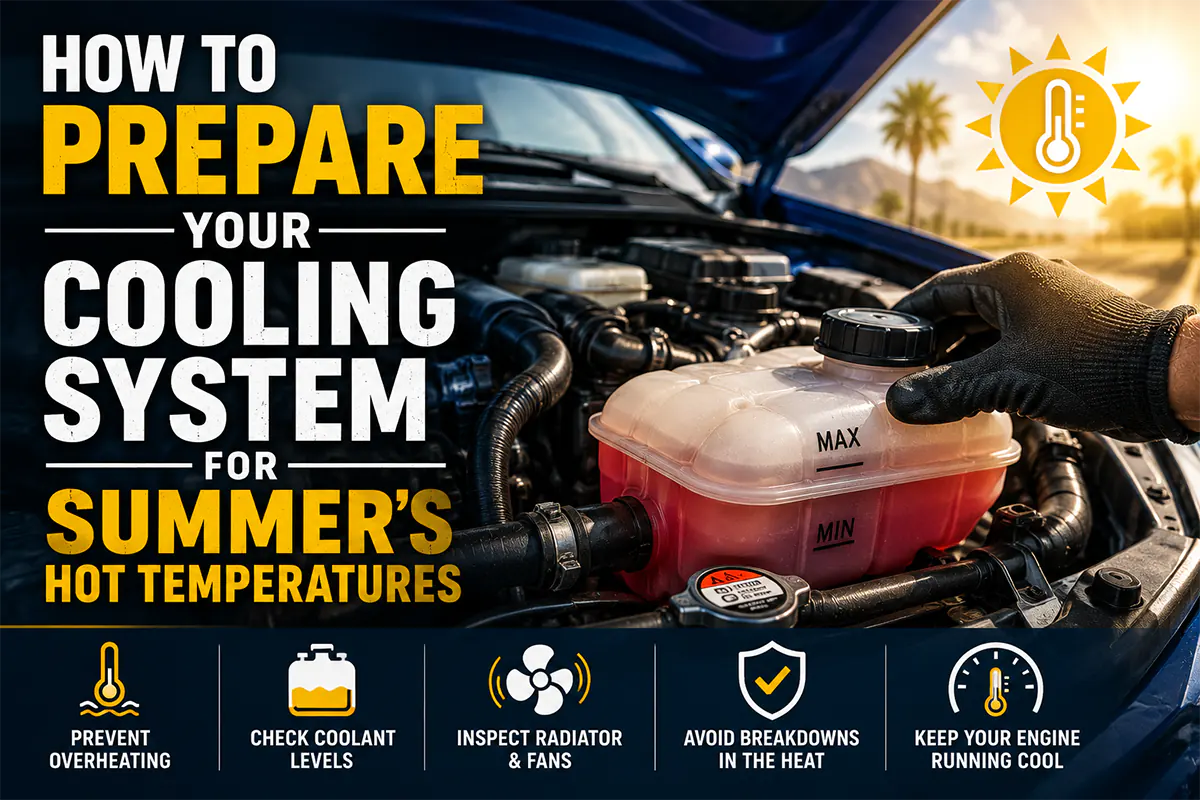
Locate the coolant reservoir and ensure the fluid is between the “MIN” and “MAX” lines. Always check coolant levels when the engine is cool.
Low coolant can reduce the system’s ability to regulate engine temperature.
2. Inspect Coolant Condition
Coolant should appear clean and brightly colored, usually green, orange, yellow, or pink depending on the type.
If the coolant looks:
- Rusty
- Dirty
- Cloudy
- Oily
…it may be time for a coolant flush.
Old coolant loses its protective properties and can contribute to overheating and corrosion.
3. Flush the Cooling System if Needed
Most manufacturers recommend flushing the cooling system every 30,000 to 100,000 miles depending on the coolant type.
A coolant flush removes:
- Rust
- Scale buildup
- Contaminants
- Old coolant
Fresh coolant improves heat transfer and protects internal components.
4. Inspect Radiator Hoses
Heat causes rubber hoses to weaken over time.
Check hoses for:
- Cracks
- Bulges
- Soft spots
- Leaks
- Loose clamps
A failed radiator hose can dump coolant quickly and cause immediate overheating.
5. Examine the Radiator
Inspect the radiator for:
- Corrosion
- Bent fins
- Coolant leaks
- Dirt and debris blocking airflow
Clean debris from the radiator carefully to improve airflow and cooling efficiency.
6. Test the Thermostat
A failing thermostat may stick open or closed.
If stuck closed, coolant cannot circulate properly, leading to overheating.
Common thermostat symptoms include:
- Rapid temperature fluctuations
- Overheating engine
- Poor heater performance
Replacing a worn thermostat is relatively inexpensive compared to overheating repairs.
7. Check the Water Pump
The water pump is essential for coolant circulation.
Signs of water pump problems include:
- Coolant leaks near the pump
- Grinding noises
- Engine overheating
- Steam from the engine bay
A failing water pump should be replaced immediately.
8. Make Sure Cooling Fans Work Properly
Cooling fans help lower engine temperatures when driving slowly or idling.
Turn on your vehicle and verify the fans activate as the engine warms up.
Faulty fans can cause overheating during traffic jams or stop-and-go driving.
9. Check the Radiator Cap
The radiator cap maintains proper system pressure.
A weak or damaged cap can allow coolant loss and overheating.
If the cap shows signs of wear or corrosion, replace it.
10. Monitor Engine Temperature Regularly
During hot weather, keep an eye on your temperature gauge.
If the gauge climbs higher than normal:
- Turn off the air conditioning
- Turn on the heater to help remove engine heat
- Pull over safely if temperatures continue rising
- Allow the engine to cool before inspecting
Never remove the radiator cap while the engine is hot.
Summer Driving Tips to Reduce Overheating
In addition to maintenance, these driving habits help reduce stress on the cooling system:
- Avoid excessive idling
- Reduce heavy towing during extreme heat
- Keep your fuel tank at least partially full
- Park in shaded areas when possible
- Use the correct coolant type recommended by the manufacturer
- Schedule inspections before long road trips
What to Do If Your Car Overheats
If your engine overheats while driving:
- Pull over immediately
- Turn off the engine
- Allow the engine to cool completely
- Check coolant levels carefully
- Call for roadside assistance if necessary
Continuing to drive an overheating vehicle can destroy the engine within minutes.
Final Thoughts
Preparing your cooling system for summer is one of the smartest ways to prevent breakdowns and expensive engine repairs. Regular inspections, coolant maintenance, and replacing worn components can keep your engine running safely even during the hottest days of the year.
A little preventative maintenance now can save you thousands of dollars later — and help ensure your summer driving stays smooth, cool, and worry-free.