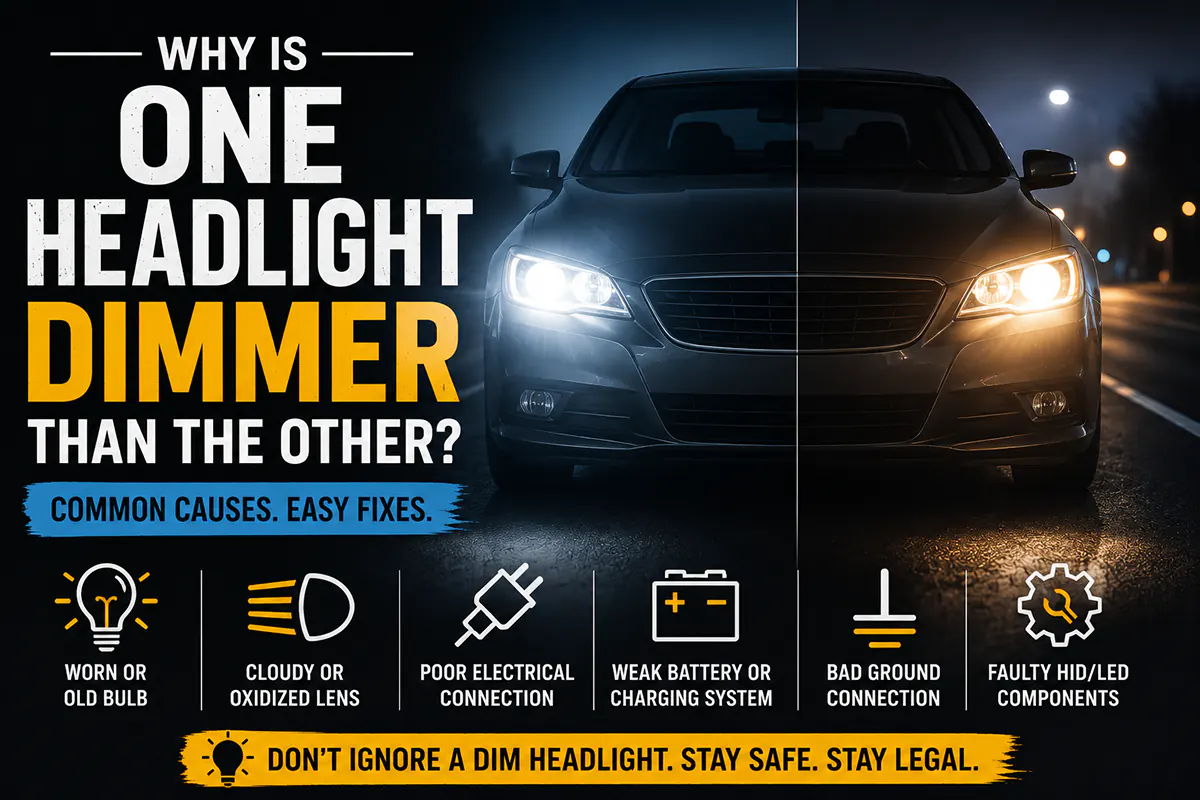
If you’ve noticed one of your headlights looking dimmer than the other, it’s more than just a cosmetic issue. Uneven headlight brightness can reduce nighttime visibility, make driving unsafe, and even lead to failed inspections or traffic citations.
A dim headlight is usually a sign of an underlying electrical or lighting problem that should be addressed before it worsens.
In this guide, we’ll explain the most common reasons one headlight appears dimmer than the other, how to diagnose the issue, and what repairs may be needed.
Why Uneven Headlights Matter
Your headlights are designed to provide balanced illumination across the road. When one side becomes dimmer, it can:
- Reduce nighttime visibility
- Create dangerous blind spots
- Make driving in rain or fog more difficult
- Cause eye strain while driving
- Reduce visibility for other drivers
- Lead to safety inspection failures
Even a slightly dim headlight may indicate a larger electrical issue developing within the vehicle.
Common Reasons One Headlight Is Dimmer Than the Other
1. Aging or Worn Headlight Bulb
The most common reason is simply an aging bulb.
Headlight bulbs lose brightness gradually over time as the filament or internal components wear down.
Signs of a worn bulb include:
- Yellowish light
- Reduced brightness
- Flickering
- Uneven beam intensity
Even if the bulb still works, it may no longer produce full brightness.
Tip:
Replace headlights in pairs whenever possible. A new bulb beside an old one often creates noticeable brightness differences.
2. Oxidized or Cloudy Headlight Lens
Plastic headlight lenses become cloudy and oxidized due to:
- Sun exposure
- UV damage
- Road debris
- Weather conditions
A foggy lens blocks light output, making the headlight appear dimmer even if the bulb is functioning properly.
Common symptoms:
- Yellowed lenses
- Hazy appearance
- Reduced nighttime visibility
Headlight restoration or lens replacement can dramatically improve brightness.
3. Weak Electrical Connection
A poor electrical connection can reduce voltage reaching the bulb.
Common causes include:
- Corroded connectors
- Loose wiring
- Damaged sockets
- Frayed wires
Lower voltage means the bulb cannot operate at full brightness.
Electrical problems may also cause:
- Flickering headlights
- Intermittent operation
- Heat damage around connectors
4. Failing Alternator or Battery Issues
Your charging system powers the headlights while driving.
If the alternator or battery is weak, one headlight may appear dimmer due to inconsistent voltage delivery.
Signs of charging system problems include:
- Dimming interior lights
- Slow engine cranking
- Battery warning light
- Multiple electrical issues
A charging system test can help diagnose the problem.
5. Poor Ground Connection
Headlights rely on proper grounding to complete the electrical circuit.
A bad ground connection can reduce brightness and create electrical resistance.
Symptoms may include:
- Dim headlights
- Flickering lights
- Lights that brighten or dim unexpectedly
Corroded ground wires are especially common in older vehicles.
6. Incorrect Bulb Type
Using the wrong bulb type or wattage can create uneven brightness between headlights.
Some drivers accidentally install:
- Different bulb brands
- Different color temperatures
- Incorrect wattage bulbs
- LED conversion kits with mismatched output
Always use manufacturer-recommended bulb specifications.
7. Faulty HID or LED Components
Vehicles equipped with HID or LED headlights may develop problems with:
- Ballasts
- LED drivers
- Control modules
A failing ballast or driver can reduce light output on one side.
Common symptoms:
- Delayed startup
- Flickering
- Color differences
- Dimming
These systems are more complex than traditional halogen bulbs and may require professional diagnostics.
8. Corrosion Inside the Headlight Housing
Moisture inside the headlight assembly can lead to:
- Corrosion
- Electrical resistance
- Reduced brightness
Look for:
- Condensation inside the lens
- Water buildup
- Rust around connectors
Water intrusion often damages bulbs and wiring over time.
How to Diagnose a Dim Headlight
Step 1: Compare Both Bulbs
Turn on the headlights and inspect:
- Brightness
- Color
- Beam pattern
If one bulb appears more yellow or weaker, it may simply be worn out.
Step 2: Inspect the Lens
Check for:
- Fogging
- Yellowing
- Cracks
- Moisture buildup
Cloudy lenses significantly reduce light output.
Step 3: Swap Bulbs
If possible, swap the bulbs from left to right.
If the dimness moves with the bulb, the bulb is the problem.
If the same side remains dim, the issue is likely electrical or related to the housing.
Step 4: Check Wiring and Connectors
Inspect for:
- Corrosion
- Melted connectors
- Loose wiring
- Burn marks
Damaged connectors can reduce voltage flow.
Step 5: Test Charging System Voltage
A weak alternator or battery may affect headlight brightness.
Most healthy charging systems produce:
- Approximately 13.5 to 14.5 volts while running
Can a Dim Headlight Be Dangerous?
Yes. Dim headlights reduce visibility and reaction time, especially during:
- Night driving
- Rain
- Snow
- Fog
- Rural driving
Poor visibility increases the risk of accidents and may prevent other drivers from seeing your vehicle clearly.
How to Fix a Dim Headlight
The proper repair depends on the cause.
Possible solutions include:
- Replacing old bulbs
- Restoring cloudy lenses
- Repairing wiring
- Cleaning ground connections
- Replacing faulty ballasts
- Repairing charging system issues
- Replacing damaged headlight assemblies
In many cases, a simple bulb replacement solves the issue.
Preventing Headlight Problems
To keep your headlights bright and reliable:
- Replace bulbs in pairs
- Clean headlights regularly
- Restore oxidized lenses early
- Avoid touching bulb glass during installation
- Inspect for moisture buildup
- Address electrical issues quickly
Routine inspections can help catch lighting problems before they become serious.
Final Thoughts
One headlight appearing dimmer than the other is usually caused by a worn bulb, cloudy lens, poor electrical connection, or charging system issue. While some fixes are simple, others may involve deeper electrical diagnostics.
Ignoring dim headlights can reduce visibility and create serious safety risks, especially during nighttime driving.
If you notice uneven headlight brightness, diagnosing and repairing the problem early can improve safety, restore visibility, and prevent more expensive electrical repairs later.
Need Professional Mobile Auto Repair in Central Ohio?
Whether you need diagnostics, electrical repairs, lighting repairs, battery service, or general vehicle maintenance, Mid-Ohio Mobile Mechanic brings professional automotive service directly to your location.
Mid-Ohio Mobile Mechanic
☎️ (614) 414-2241
✉️ contact@midohiomobilemechanic.com
🌐 midohiomobilemechanic.com
Request a Quote
🚗 https://midohiomobilemechanic.com/request-a-quote/
Fast. Convenient. Reliable mobile mechanic services throughout Central Ohio.