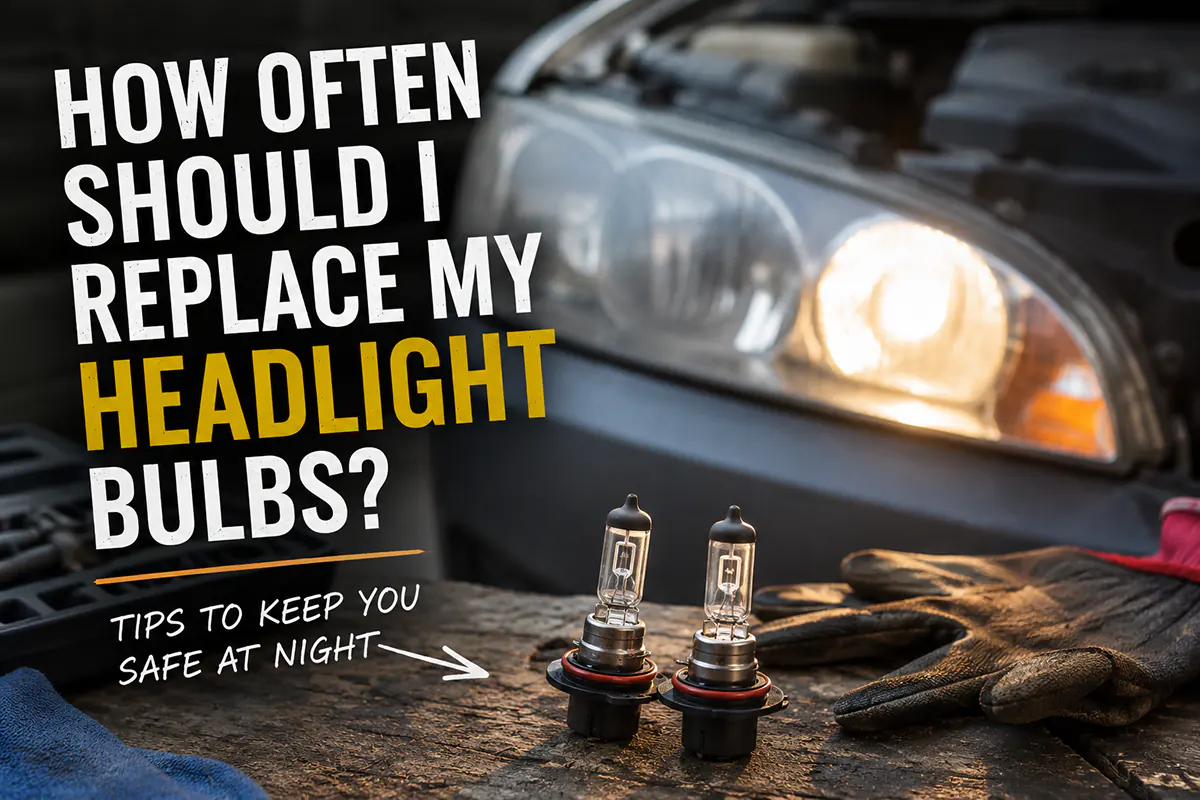
Headlights are one of the most important safety features on your vehicle. They help you see the road clearly at night, improve visibility during bad weather, and allow other drivers to see you. But like any automotive component, headlight bulbs wear out over time and eventually need replacement.
Many drivers wait until a bulb completely burns out before replacing it, but dim or aging headlights can reduce visibility long before total failure occurs.
So how often should you replace your headlight bulbs?
The answer depends on the type of bulb your vehicle uses, your driving habits, and overall bulb condition.
In this guide, we’ll explain average headlight bulb lifespan, signs your bulbs need replacement, and how to keep your lighting system working safely.
Why Headlight Bulbs Wear Out
Headlight bulbs operate under high heat and constant electrical load. Over time, the internal components degrade from:
- Heat cycles
- Vibration
- Moisture exposure
- Electrical wear
- Normal aging
As bulbs age, they usually become dimmer before they fail completely.
Even if both headlights still turn on, reduced brightness can significantly affect nighttime visibility.
Average Lifespan of Different Headlight Bulbs
Not all headlight bulbs last the same amount of time.
Halogen Headlight Bulbs
Halogen bulbs are the most common type used in vehicles.
Average lifespan:
- 500 to 1,000 hours
For many drivers, this translates to:
- Approximately 2 to 5 years
Halogen bulbs are affordable but tend to wear out faster than newer technologies.
HID (Xenon) Headlights
HID headlights are brighter and more energy-efficient than halogen bulbs.
Average lifespan:
- 2,000 to 3,000 hours
These systems use ballasts and specialized components to generate light.
LED Headlights
LED headlights are now common in many newer vehicles.
Average lifespan:
- 15,000 to 30,000 hours or more
While LEDs last much longer, the full headlight assembly or driver components may eventually fail.
Factors That Affect Headlight Bulb Life
Several conditions can shorten bulb lifespan.
Frequent Night Driving
Drivers who regularly drive at night naturally use their headlights more often.
More usage equals faster wear.
Rough Roads and Vibration
Excessive vibration from rough roads or worn suspension components can damage bulb filaments.
Moisture Inside the Headlight Housing
Condensation or water leaks inside the housing can shorten bulb life and damage electrical connections.
Poor Electrical Connections
Faulty wiring or voltage fluctuations can cause bulbs to burn out prematurely.
Touching Halogen Bulbs During Installation
Oil from your fingers creates hot spots on halogen bulbs, which can reduce lifespan significantly.
Always handle bulbs with gloves or a clean cloth.
Signs Your Headlight Bulbs Need Replacement
Even before total failure, your headlights may show warning signs.
1. Dim Headlights
One of the earliest signs is reduced brightness.
Older bulbs gradually lose intensity over time.
2. Flickering Lights
Intermittent flickering may indicate:
- Aging bulbs
- Loose wiring
- Electrical issues
3. Yellow or Discolored Light
Older halogen bulbs often become more yellow as they wear out.
4. Uneven Brightness
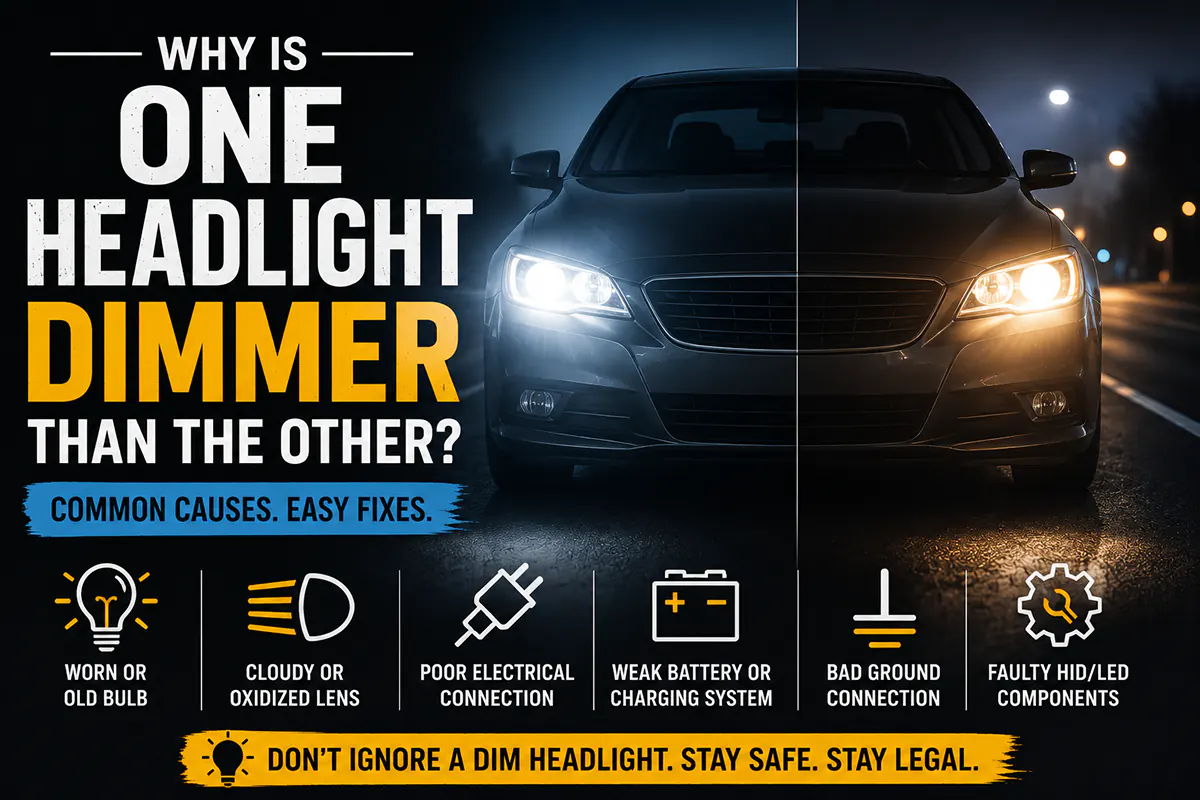
If one headlight appears dimmer than the other, one bulb may be nearing failure.
5. Complete Burnout
Eventually, the bulb stops working entirely.
Driving with a burned-out headlight is dangerous and may result in traffic citations.
Should You Replace Both Headlight Bulbs at the Same Time?
Yes — in most cases, replacing headlights in pairs is highly recommended.
Reasons include:
- Balanced brightness
- Matching color temperature
- Reduced chance of another bulb failing soon
- Improved nighttime visibility
If one bulb has failed, the other is often close to the end of its lifespan as well.
How to Extend Headlight Bulb Life
You can help your bulbs last longer by following these tips:
- Avoid touching bulb glass during installation
- Repair moisture leaks promptly
- Keep electrical connections clean
- Secure loose wiring
- Use high-quality replacement bulbs
- Avoid cheap aftermarket bulbs
Routine inspections can also catch problems early.
Choosing the Right Replacement Bulbs
Always use the bulb type recommended by your vehicle manufacturer.
Common bulb types include:
- H11
- 9005
- 9006
- H7
- D1S
- D2S
Using incorrect bulbs may:
- Reduce visibility
- Damage wiring
- Cause glare for other drivers
- Trigger warning lights
High-quality OEM or premium aftermarket bulbs typically provide the best reliability.
Halogen vs LED vs HID: Which Is Best?
Halogen
Pros:
- Affordable
- Easy to replace
Cons:
- Shorter lifespan
- Less brightness
HID (Xenon)
Pros:
- Very bright
- Longer lifespan than halogen
Cons:
- More expensive
- Complex components
LED
Pros:
- Extremely long lifespan
- Energy efficient
- Bright illumination
Cons:
- Higher replacement cost
- Some systems require full assembly replacement
Can You Replace Headlight Bulbs Yourself?
In many vehicles, headlight bulb replacement is relatively simple.
However, some modern vehicles require:
- Removing bumpers
- Accessing tight engine compartments
- Specialized tools
If you’re unsure, professional installation helps prevent:
- Damaged connectors
- Improper installation
- Moisture leaks
- Alignment problems
When to Have Your Headlight System Inspected
You should schedule an inspection if you notice:
- Frequent bulb failures
- Flickering lights
- Moisture inside the housing
- Dim headlights
- Electrical burning smells
- Dashboard lighting warnings
Repeated bulb failures may indicate deeper electrical problems.
Final Thoughts
Most headlight bulbs should be replaced every few years depending on the bulb type and your driving habits. Even before a bulb completely burns out, aging headlights can become dimmer and reduce nighttime safety.
Replacing bulbs in pairs, inspecting your lighting system regularly, and using quality replacement components can help maintain clear visibility and safer driving conditions.
If your headlights appear dim, flicker, or fail repeatedly, addressing the problem early can prevent more serious electrical or lighting system issues later.
Need Professional Mobile Auto Repair in Central Ohio?
Whether you need electrical diagnostics, headlight repairs, battery service, or general vehicle maintenance, Mid-Ohio Mobile Mechanic brings professional automotive service directly to your location.
Mid-Ohio Mobile Mechanic
☎️ (614) 414-2241
✉️ contact@midohiomobilemechanic.com
🌐 midohiomobilemechanic.com
Request a Quote
🚗 https://midohiomobilemechanic.com/request-a-quote/
Fast. Convenient. Reliable mobile mechanic services throughout Central Ohio.