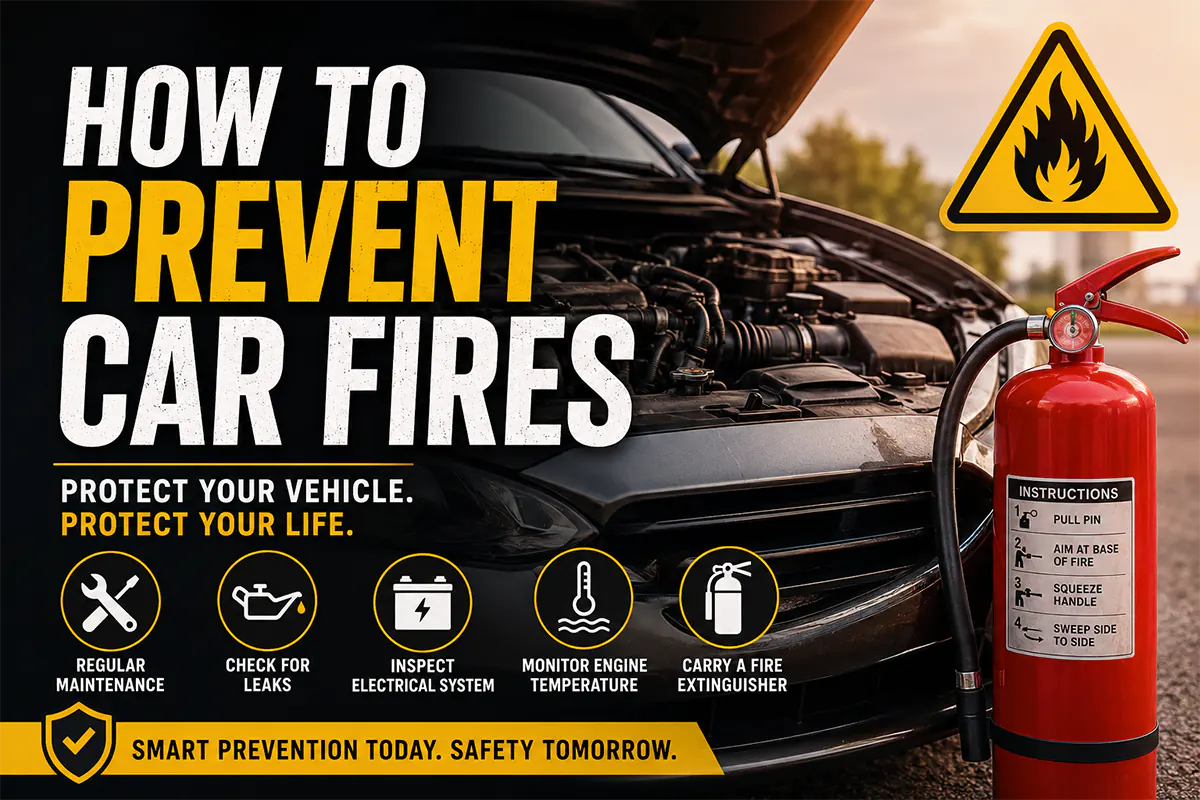
Car fires are more common than many drivers realize, and they can happen without warning. A small fuel leak, faulty wiring, overheating engine, or neglected maintenance issue can quickly turn into a dangerous situation. The good news is that most vehicle fires are preventable with regular inspections and smart driving habits.
In this guide, you’ll learn the most common causes of car fires, warning signs to watch for, and practical steps you can take to keep your vehicle safe.
What Causes Car Fires?
Vehicle fires usually start because of mechanical or electrical failures. Here are the most common causes:
1. Fuel System Leaks
Gasoline and diesel are highly flammable. Even a small leak in the fuel line or injector system can ignite if it contacts hot engine components.
2. Electrical Problems
Damaged wiring, blown fuses, overloaded circuits, or poorly installed aftermarket accessories can create sparks that lead to fires.
3. Overheating Engines
Engines that run too hot can ignite leaking oil, coolant, or debris trapped under the hood.
4. Oil Leaks
Motor oil dripping onto hot engine parts like the exhaust manifold is a major fire risk.
5. Accidents and Collisions
Crash damage can rupture fuel lines, batteries, or electrical systems.
6. Poor Maintenance
Neglecting routine inspections increases the chance that hidden problems will become dangerous.
Warning Signs of a Potential Car Fire
Pay attention to these warning signs before they become serious:
- Burning smell inside or outside the car
- Smoke coming from under the hood
- Electrical issues or flickering lights
- Blown fuses repeatedly
- Fluid leaks under the vehicle
- Engine overheating
- Unusual popping or crackling noises
- Strong fuel odor
If you notice any of these symptoms, stop driving and inspect the vehicle immediately.
10 Ways to Prevent Car Fires
1. Keep Up With Regular Maintenance
Routine maintenance is the best defense against vehicle fires. Follow your manufacturer’s recommended service schedule for:
- Oil changes
- Cooling system checks
- Fuel system inspections
- Belt and hose replacements
- Electrical diagnostics
A mechanic can spot leaks, worn wires, or overheating issues before they become dangerous.
2. Inspect for Fluid Leaks
Check beneath your car regularly for:
- Oil leaks
- Fuel leaks
- Transmission fluid
- Coolant leaks
Even small leaks can become hazardous if they contact hot engine surfaces.
3. Watch Engine Temperature
Never ignore an overheating engine. If the temperature gauge climbs unusually high:
- Pull over safely
- Turn off the engine
- Allow the vehicle to cool
- Check coolant levels after cooling
Driving while overheated significantly increases fire risk.
4. Repair Electrical Problems Quickly
Electrical failures are one of the leading causes of vehicle fires. Have your car inspected if you notice:
- Flickering headlights
- Burning plastic smell
- Battery problems
- Frequent fuse failures
- Dashboard warning lights
Avoid DIY wiring unless you fully understand automotive electrical systems.
5. Avoid Cheap Aftermarket Accessories
Poorly installed electronics like stereos, remote starters, lighting kits, or chargers can overload wiring systems.
Use high-quality parts and professional installation whenever possible.
6. Keep the Engine Bay Clean
Leaves, grease, oil buildup, and debris under the hood can ignite from engine heat.
Periodically clean the engine compartment carefully and remove flammable materials.
7. Store Flammable Liquids Properly
Do not keep gasoline containers, propane tanks, aerosol cans, or oily rags inside your vehicle for long periods.
Heat buildup inside parked cars can create dangerous conditions.
8. Carry a Fire Extinguisher
A small automotive fire extinguisher can prevent a minor fire from becoming catastrophic.
Choose an extinguisher rated for:
- Class B fires (flammable liquids)
- Class C fires (electrical)
Store it somewhere easily accessible.
9. Check for Recalls
Manufacturers sometimes issue recalls for fire-related defects involving:
- Fuel systems
- Batteries
- Electrical wiring
- Engine components
Search your VIN regularly for active recalls.
10. Drive Safely After an Accident
Even minor collisions can damage fuel or electrical systems. After an accident:
- Inspect for leaking fluids
- Watch for smoke or unusual smells
- Avoid restarting heavily damaged vehicles
Have the car professionally inspected before driving again.
What to Do If Your Car Catches Fire
If you suspect a vehicle fire:
- Pull over immediately
- Turn off the engine
- Get everyone out of the vehicle
- Move a safe distance away
- Call emergency services
- Use a fire extinguisher only if the fire is very small and contained
Never open the hood fully during an engine fire, as oxygen can intensify flames.
Final Thoughts
Car fires are frightening, but most are preventable with proper maintenance and quick attention to warning signs. Regular inspections, repairing leaks, monitoring electrical systems, and driving responsibly can dramatically reduce your risk.
Taking a proactive approach to vehicle safety not only protects your car — it can also save lives.