Your vehicle’s timing belt is one of the most important components inside the engine. Although it’s often out of sight and out of mind, a failing timing belt can lead to serious engine damage — and in some cases, complete engine failure.
Unlike some car parts that slowly wear out with obvious symptoms, timing belts can fail suddenly if they are not replaced at the proper interval.
In this guide, we’ll explain what a timing belt does, common warning signs of failure, recommended replacement intervals, and why replacing your timing belt on time is critical for protecting your engine.
What Does a Timing Belt Do?
The timing belt synchronizes the movement of the:
- Crankshaft
- Camshaft(s)
This synchronization ensures the engine’s valves open and close at precisely the correct time during combustion.
In many engines, the timing belt also drives:
- Water pump
- Balance shafts
- Other engine components
Without proper timing belt operation, the engine cannot run correctly.
Why Timing Belts Wear Out
Timing belts are made from reinforced rubber materials that endure:
- Constant heat
- Friction
- Tension
- Engine vibration
Over time, the belt naturally deteriorates due to:
- Age
- Mileage
- Heat exposure
- Oil contamination
- Wear on tensioners and pulleys
Even if the vehicle seems to run normally, the belt may still be approaching failure.
What Happens If a Timing Belt Breaks?
A broken timing belt can cause severe internal engine damage, especially in interference engines.
When the belt breaks:
- Camshafts stop rotating
- Valves may remain open
- Pistons continue moving
This can result in:
- Bent valves
- Damaged pistons
- Cylinder head damage
- Complete engine failure
Timing belt failure often happens without warning.
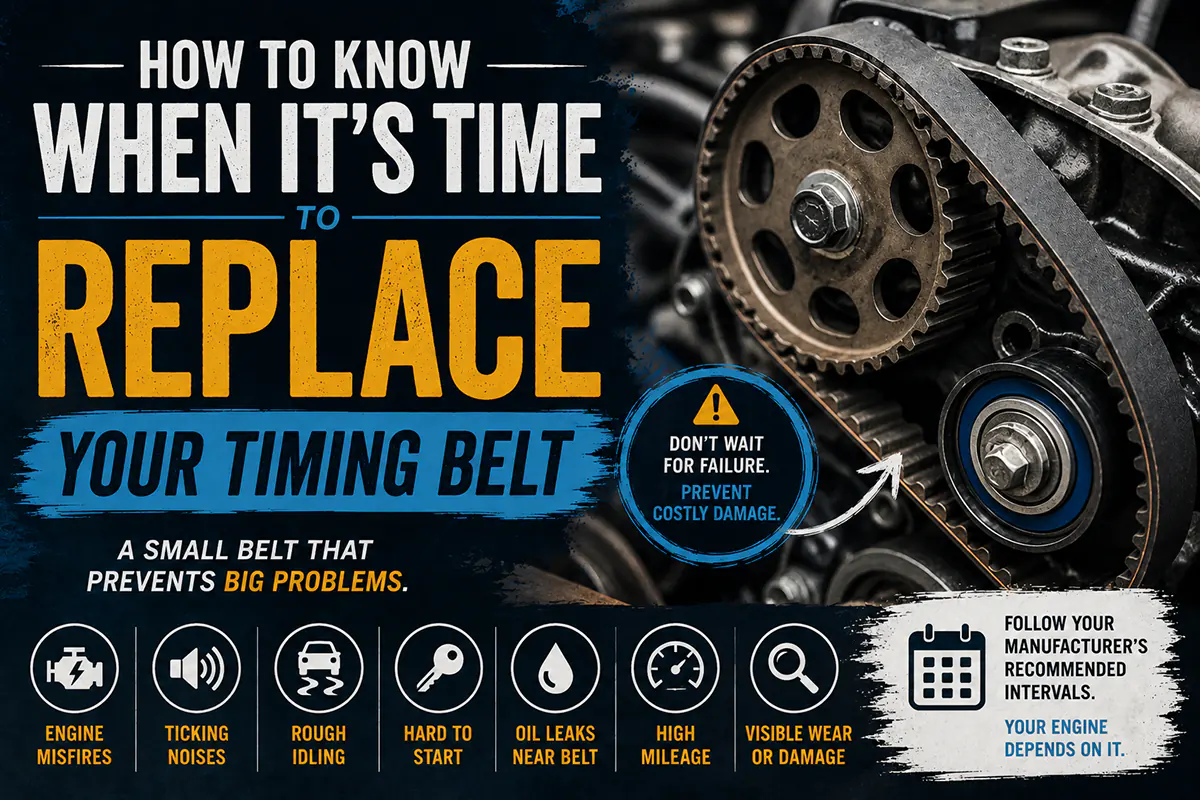
Common Warning Signs Your Timing Belt Needs Replacement
1. Engine Misfires
A worn timing belt may slip on the pulleys and throw off engine timing.
This can cause:
- Engine misfires
- Rough running
- Poor acceleration
Improper valve timing disrupts the combustion process.
2. Ticking Noise From the Engine
A ticking or clicking sound from the engine area may indicate:
- Timing belt wear
- Low belt tension
- Worn tensioners
While many engine noises are possible, unusual ticking should never be ignored.
3. Difficulty Starting the Engine
If the timing belt slips or loses synchronization, the engine may struggle to start or fail to start entirely.
In severe cases:
- The engine may crank but not start
This can happen when valve timing becomes incorrect.
4. Rough Idling
A worn or stretched timing belt may cause:
- Engine vibrations
- Uneven idle
- Shaking while stopped
Incorrect timing affects engine smoothness and performance.
5. Visible Belt Wear or Damage
If accessible, a visual inspection may reveal:
- Cracks
- Fraying
- Missing teeth
- Glazing
- Oil contamination
Any visible damage means replacement is needed immediately.
6. Oil Leaks Near the Timing Cover
Oil leaking onto the timing belt can accelerate deterioration.
Common causes include:
- Camshaft seal leaks
- Crankshaft seal leaks
- Valve cover gasket leaks
Oil contamination weakens the belt material over time.
7. High Mileage Without Replacement
Many timing belts fail simply because they were never replaced at the recommended interval.
Most manufacturers recommend replacement somewhere between:
- 60,000 to 100,000 miles
However, replacement intervals vary by vehicle.
Always consult your owner’s manual or maintenance schedule.
Timing Belt vs Timing Chain
Some vehicles use timing chains instead of timing belts.
Timing Belt
- Rubber construction
- Requires periodic replacement
- Quieter operation
Timing Chain
- Metal construction
- Typically lasts longer
- May still wear over time
Not all vehicles have timing belts, so it’s important to know which system your engine uses.
When Should You Replace a Timing Belt?
Timing belt replacement should be based on:
- Manufacturer recommendations
- Vehicle mileage
- Belt condition
- Vehicle age
Even low-mileage vehicles may need timing belt replacement due to rubber aging.
For example:
- A 10-year-old vehicle with low mileage may still require replacement
Heat and age degrade rubber over time regardless of mileage.
Should the Water Pump Be Replaced at the Same Time?
In many vehicles, the water pump is driven by the timing belt.
Because the same labor is required to access both components, many mechanics recommend replacing:
- Water pump
- Belt tensioners
- Idler pulleys
during timing belt service.
This helps avoid duplicate labor costs later.
Symptoms of Immediate Timing Belt Failure
You should stop driving immediately if you experience:
- Sudden engine shutdown
- Loud snapping noise
- Engine cranking without starting
- Severe misfiring
- Sudden loss of power
Continuing to drive may worsen internal engine damage.
Can You Drive With a Bad Timing Belt?
Driving with a worn timing belt is extremely risky.
Unlike some components that fail gradually, timing belts can break suddenly without much warning.
Delaying replacement increases the risk of:
- Engine destruction
- Expensive repairs
- Roadside breakdowns
Preventative replacement is far cheaper than engine replacement.
How Much Does Timing Belt Replacement Cost?
Timing belt replacement costs vary depending on:
- Vehicle make and model
- Engine design
- Labor requirements
- Additional components replaced
Because timing belt service is labor-intensive, replacing related components during the repair is usually cost-effective.
Signs Your Timing Belt Was Replaced Incorrectly
Improper timing belt installation can cause serious problems.
Symptoms may include:
- Engine misfires
- Poor acceleration
- Rough idle
- Check engine light
- Engine damage
Timing components must be installed precisely according to manufacturer specifications.
How to Extend Timing Belt Life
While timing belts eventually wear out, you can help maximize lifespan by:
- Following maintenance schedules
- Repairing oil leaks quickly
- Preventing engine overheating
- Replacing worn tensioners
- Using quality replacement parts
Routine inspections help catch problems early.
Final Thoughts
Your timing belt plays a critical role in engine operation, and replacing it at the proper interval is one of the most important preventative maintenance services you can perform.
Ignoring timing belt replacement can lead to catastrophic engine damage and extremely expensive repairs. Watching for warning signs like engine misfires, ticking noises, rough idling, or oil leaks can help you address problems before failure occurs.
If your vehicle is approaching the recommended replacement mileage or showing symptoms of timing belt wear, scheduling service early can save you thousands in future repair costs.
Need Professional Mobile Auto Repair in Central Ohio?
Whether you need timing belt replacement, engine diagnostics, water pump service, or preventative maintenance, Mid-Ohio Mobile Mechanic brings professional automotive service directly to your location.
Mid-Ohio Mobile Mechanic
☎️ (614) 414-2241
✉️ contact@midohiomobilemechanic.com
🌐 midohiomobilemechanic.com
Request a Quote
🚗 https://midohiomobilemechanic.com/request-a-quote/
Fast. Convenient. Reliable mobile mechanic services throughout Central Ohio.