Transmission maintenance is one of the most misunderstood topics in automotive care. Many drivers have heard stories about a vehicle running perfectly fine until the transmission fluid was changed — and suddenly the transmission started slipping, shifting poorly, or failed completely.
So why does this happen?
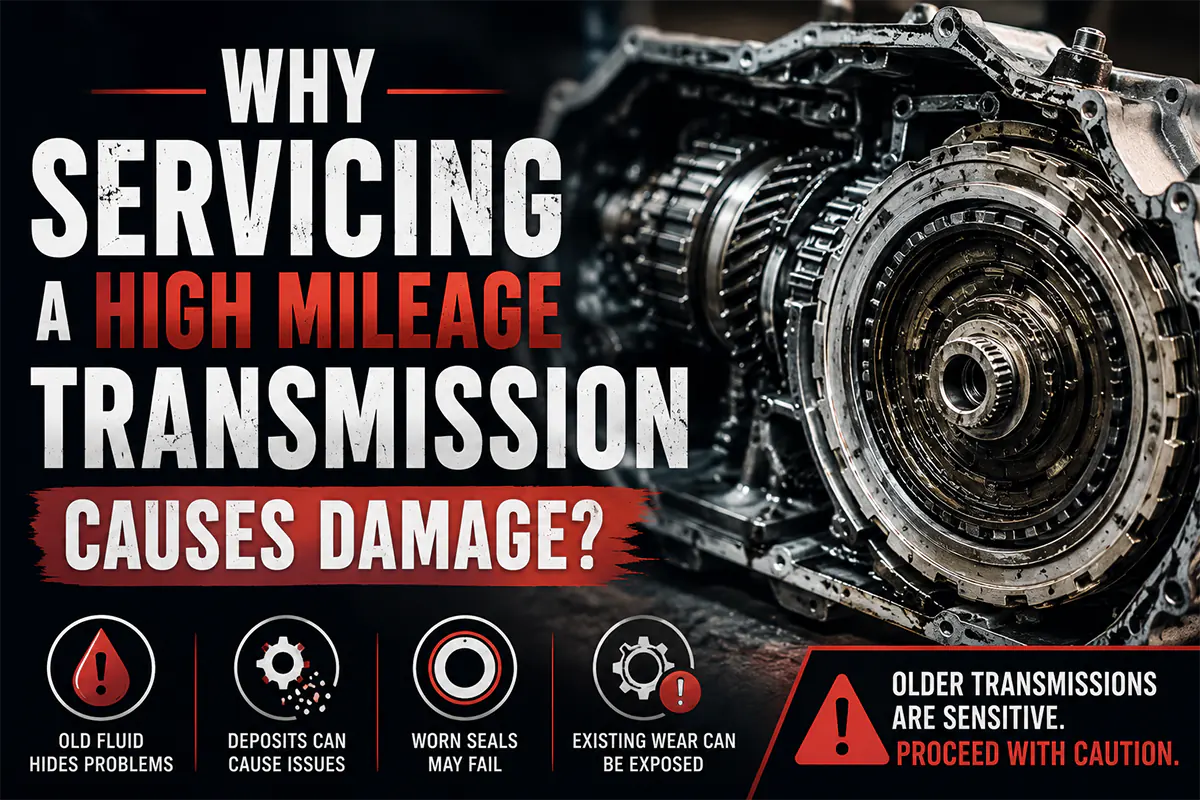
The truth is that servicing a neglected high mileage transmission doesn’t directly “cause” damage in most cases. Instead, the service often exposes existing wear and internal problems that were already present.
In this guide, we’ll explain why high mileage transmission service can sometimes lead to problems, when servicing is still beneficial, and how to properly maintain an older transmission to reduce the risk of failure.
Understanding How a Transmission Works
Your vehicle’s transmission is responsible for transferring engine power to the wheels while changing gears smoothly.
Automatic transmissions rely heavily on transmission fluid for:
- Lubrication
- Cooling
- Hydraulic pressure
- Cleaning internal components
- Proper clutch engagement
Without clean fluid, the transmission cannot operate efficiently or safely.
What Happens to Transmission Fluid Over Time?
As miles accumulate, transmission fluid gradually breaks down due to:
- Heat
- Friction
- Oxidation
- Internal wear
- Metal contamination
Over time, old fluid becomes:
- Dark
- Burnt-smelling
- Dirty
- Less effective at lubrication
The transmission itself also experiences wear, especially after 100,000 miles or more.
Common high mileage transmission wear includes:
- Worn clutch packs
- Hardened seals
- Valve body wear
- Metal debris buildup
- Reduced hydraulic pressure
This is where transmission servicing becomes complicated.
Why Servicing a High Mileage Transmission Can Sometimes Cause Problems
1. Old Fluid May Be Helping Worn Components Function
In severely worn transmissions, old fluid often contains suspended clutch material and debris.
While dirty fluid is not healthy, those particles may actually help worn clutch packs maintain enough friction to continue shifting.
When fresh fluid is installed:
- Old debris is removed
- New detergents clean deposits
- Friction characteristics change
As a result, worn clutch packs may begin slipping.
The new fluid did not damage the transmission — it revealed internal wear that already existed.
2. Fresh Detergents Can Loosen Deposits
New transmission fluid contains cleaning additives and detergents.
In neglected transmissions, sludge and varnish may have built up inside:
- Valve bodies
- Solenoids
- Internal passages
Fresh fluid can loosen these deposits, potentially causing:
- Blocked passages
- Sticky valves
- Irregular shifting
- Pressure problems
Again, the transmission was already worn internally before the service.
3. Transmission Flushes Can Increase Risk
One of the biggest risks for high mileage transmissions is performing an aggressive transmission flush.
A flush machine forces fluid through the system under pressure to remove old fluid quickly.
On older transmissions, this can:
- Dislodge debris suddenly
- Stress weakened seals
- Disturb sediment buildup
- Cause pressure-related issues
Many transmission specialists prefer a simple drain-and-fill service instead of a full flush on older vehicles.
4. Worn Seals May Fail After Service
Old transmission seals become brittle and hardened with age.
Fresh fluid sometimes contains different additives or detergents that expose weakened seals, leading to:
- Fluid leaks
- Pressure loss
- Shifting problems
In reality, the seals were already near failure before the service.
Signs Your High Mileage Transmission May Already Be Worn
Before servicing an older transmission, look for warning signs such as:
- Slipping gears
- Delayed shifting
- Harsh shifting
- Burning smell
- Shuddering during acceleration
- Dark or burnt transmission fluid
- Transmission warning lights
- Fluid leaks
If these symptoms already exist, servicing may not solve the underlying problem.
When Transmission Service Is Still a Good Idea
Despite the risks, regular transmission maintenance is usually beneficial when done properly and consistently.
Transmission service is generally safer when:
- Fluid has been changed regularly throughout the vehicle’s life
- The transmission still shifts normally
- No major slipping or overheating exists
- Fluid is dirty but not severely burnt
Preventative maintenance is far safer than waiting until severe problems appear.
Drain-and-Fill vs Transmission Flush
Drain-and-Fill
A drain-and-fill removes only part of the old fluid and replaces it gradually.
Advantages:
- Less aggressive
- Lower risk on older transmissions
- Helps preserve pressure balance
- Safer for high mileage vehicles
Many mechanics recommend this method for older transmissions.
Transmission Flush
A flush replaces nearly all transmission fluid quickly using specialized equipment.
Advantages:
- Removes more contaminated fluid
- Cleans the system thoroughly
Disadvantages for high mileage vehicles:
- Can disturb debris
- May trigger slipping
- Higher risk for neglected transmissions
Flushes are generally safer on well-maintained transmissions.
How to Safely Service a High Mileage Transmission
If you own a high mileage vehicle, these steps can help reduce risk:
1. Inspect the Fluid First
Healthy fluid is usually:
- Red or pink
- Slightly transparent
- Mild-smelling
Bad fluid may appear:
- Dark brown or black
- Burnt-smelling
- Contaminated with metal debris
Severely burnt fluid often indicates internal wear.
2. Avoid Aggressive Flushes
For older transmissions with unknown service history, many experts recommend avoiding high-pressure flushes.
A gentle drain-and-fill is often safer.
3. Replace the Filter if Possible
Some transmissions have serviceable filters that should be replaced during maintenance.
A clogged filter can restrict fluid flow and reduce pressure.
4. Use the Correct Transmission Fluid
Always use manufacturer-recommended transmission fluid.
Using incorrect fluid can cause:
- Improper shifting
- Slipping
- Internal damage
Modern transmissions are highly sensitive to fluid specifications.
5. Service the Transmission Before Problems Start
The best way to avoid transmission failure is early preventative maintenance.
Routine fluid changes every:
- 30,000 to 60,000 miles
can significantly extend transmission life.
Waiting until the transmission is already failing increases the risk of problems after servicing.
Common Myths About High Mileage Transmission Service
Myth: “Never Change Transmission Fluid on an Old Car”
This is not always true.
If the transmission has been maintained consistently, fluid changes are usually beneficial.
The real danger comes from neglected transmissions with severe internal wear.
Myth: “New Fluid Causes Transmission Failure”
Fresh fluid rarely causes failure by itself.
More often, it exposes damage or wear that was already present.
Myth: “Transmission Fluid Lasts Forever”
Some manufacturers advertise “lifetime fluid,” but all transmission fluid eventually degrades.
Heat and wear affect every transmission over time.
Final Thoughts
Servicing a high mileage transmission does not automatically cause damage, but it can reveal hidden problems in worn or neglected transmissions. Old fluid may temporarily help compensate for internal wear, and replacing it can expose slipping clutches, weak seals, or clogged components that were already near failure.
The best approach is preventative maintenance long before major symptoms appear. Regular fluid changes, proper servicing methods, and using the correct fluid can help extend transmission life and reduce the risk of costly repairs.
When dealing with an older transmission, a cautious drain-and-fill service performed by an experienced technician is often the safest option.
Need Professional Mobile Auto Repair in Central Ohio?
Whether you need diagnostics, brake repairs, engine work, transmission service, or emergency roadside repairs, Mid-Ohio Mobile Mechanic brings professional automotive service directly to your location.
Mid-Ohio Mobile Mechanic
☎️ (614) 414-2241
✉️ contact@midohiomobilemechanic.com
🌐 midohiomobilemechanic.com
Request a Quote
🚗 https://midohiomobilemechanic.com/request-a-quote/
Fast. Convenient. Reliable mobile mechanic services throughout Central Ohio.