Don’t Leave the Scene Without These Car Accident Photos
Being involved in a car accident can be stressful and overwhelming. In the moments following a collision, documenting the scene with clear photos can be one of the most important steps you take. These photos can help support insurance claims, provide evidence for law enforcement, and protect you if there is a dispute about what happened.
Why Taking Photos After an Accident Matters
Photos provide an accurate record of the accident scene and vehicle damage before anything is moved or repaired. Insurance companies often rely on photographic evidence when determining fault and estimating repair costs.
Even if the accident appears minor, taking thorough photos can help prevent future complications.
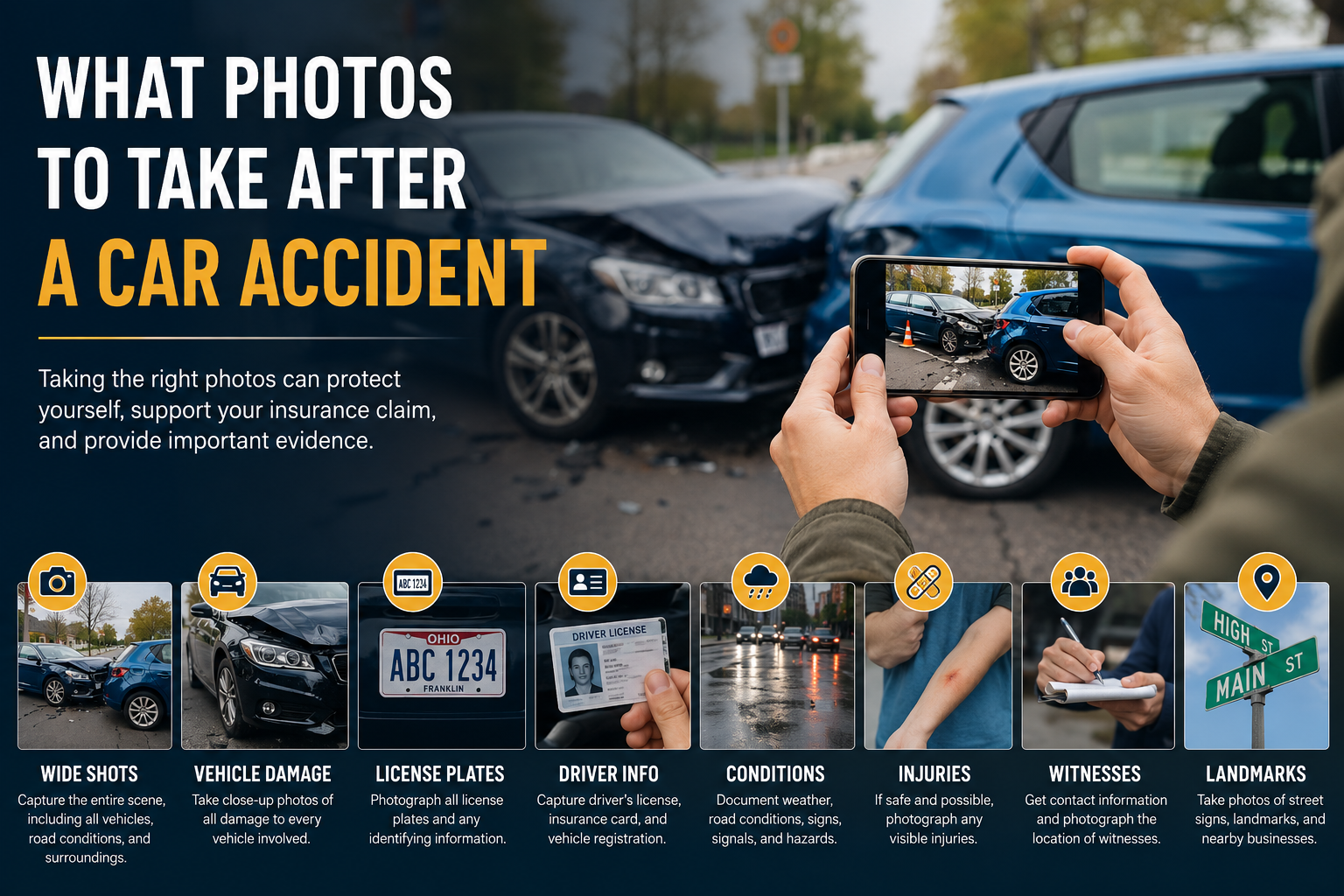
Essential Photos to Take After a Car Accident
1. Wide-Angle Photos of the Entire Accident Scene
Start by taking photos from several angles showing:
- All vehicles involved
- The positions of the vehicles
- Nearby intersections
- Traffic signs and signals
- Road conditions
- Skid marks or debris
These photos help establish how the accident occurred.
2. Vehicle Damage Photos
Take close-up and medium-range photos of all damage, including:
- Front-end damage
- Rear-end damage
- Side damage
- Broken lights
- Dents and scratches
- Cracked glass
- Tire damage
Photograph both your vehicle and any other vehicles involved.
3. License Plates
Take clear photos of:
- Your license plate
- The other driver’s license plate
- Any commercial vehicle markings if applicable
This helps identify the vehicles involved in the accident.
4. Driver Information
With permission, photograph:
- Driver’s license
- Insurance card
- Vehicle registration
Always verify that the information is current and legible.
5. Road and Weather Conditions
Document factors that may have contributed to the accident, including:
- Rain, snow, or ice
- Potholes
- Construction zones
- Poor visibility
- Damaged road signs
- Standing water
These details may become important later during an investigation.
6. Injuries
If injuries are visible and it is safe to do so, photograph them as soon as possible. Continue documenting injuries during the recovery process to show progression and healing.
7. Witness Information
Take photos of:
- Witness contact information
- Business cards if available
- The location where witnesses were standing
Witness statements can be valuable if fault is disputed.
8. Nearby Landmarks and Street Signs
Photograph:
- Street names
- Mile markers
- Traffic lights
- Nearby businesses
- Building addresses
These details help establish the exact location of the accident.
Tips for Taking Effective Accident Photos
- Take more photos than you think you’ll need.
- Use both close-up and wide-angle shots.
- Ensure photos are clear and in focus.
- Take pictures before vehicles are moved whenever possible.
- Avoid editing or altering photos.
- Back up your photos immediately.
What If Your Vehicle Is Not Drivable?
If your vehicle must be towed, continue taking photos at the tow yard and repair facility. Additional damage documentation can help prevent disputes during the repair process.
Final Thoughts
The moments immediately following a car accident are critical. Taking comprehensive photos can protect your interests, support your insurance claim, and provide valuable evidence if legal issues arise. By documenting the accident scene thoroughly, you’ll be better prepared for whatever comes next.
Need a professional inspection after an accident? Mid Ohio Mobile Mechanic provides on-site vehicle inspections and diagnostics throughout the Columbus area to help identify hidden damage and ensure your vehicle is safe to drive. Contact us today to schedule an appointment.
Call or Text: (614) 414-2241
Email: contact@midohiomobilemechanic.com
Request a Free Quote HERE