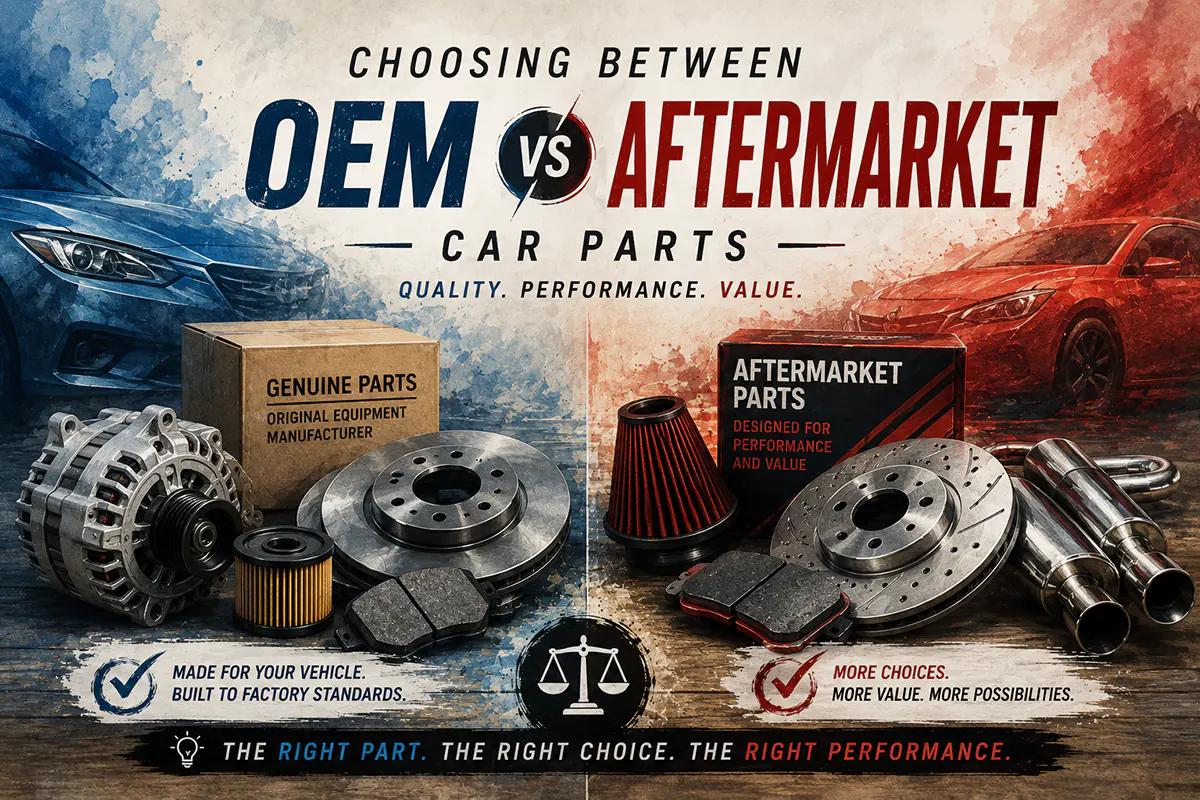
When your vehicle needs repairs, one of the biggest decisions you may face is whether to use OEM or aftermarket car parts. While both options can restore your vehicle’s performance, they differ in quality, price, availability, and compatibility.
Some drivers automatically choose OEM parts for peace of mind, while others prefer aftermarket parts for affordability or upgraded performance. The right choice often depends on your vehicle, budget, and repair goals.
In this guide, we’ll explain the differences between OEM and aftermarket parts, the pros and cons of each, and how to decide which option is best for your vehicle.
What Are OEM Parts?
OEM stands for:
- Original Equipment Manufacturer
OEM parts are made by the same manufacturer that produced the original parts installed on your vehicle at the factory.
These parts are designed to match:
- Exact specifications
- Factory performance
- Original fitment
For example, if your vehicle is a Honda, OEM parts are typically made by Honda or one of Honda’s approved suppliers.
Advantages of OEM Parts
1. Exact Fit and Compatibility
OEM parts are built specifically for your vehicle.
This usually means:
- Easier installation
- Precise fitment
- Consistent performance
You generally won’t need to worry about modifications or compatibility issues.
2. Factory-Level Quality
OEM parts are manufactured to meet the automaker’s original standards.
This often provides:
- Reliable durability
- Predictable performance
- Factory-like operation
Many drivers prefer OEM parts for critical systems like:
- Engine components
- Sensors
- Transmission parts
3. Warranty Protection
Many OEM parts include manufacturer warranties.
This can provide additional peace of mind if problems occur after installation.
4. Better for Newer Vehicles
OEM parts are often recommended for:
- New vehicles
- Vehicles under warranty
- Lease vehicles
Using OEM components may help maintain manufacturer warranty coverage in some cases.
Disadvantages of OEM Parts
1. Higher Cost
OEM parts are usually more expensive than aftermarket alternatives.
In some cases, pricing may be significantly higher.
2. Limited Availability
OEM parts may require ordering directly from dealerships or suppliers.
This can sometimes lead to:
- Longer repair times
- Shipping delays
3. Fewer Choices
With OEM parts, you’re typically limited to the original factory design.
Drivers looking for upgraded performance may prefer aftermarket options instead.
What Are Aftermarket Parts?
Aftermarket parts are produced by third-party manufacturers rather than the original automaker.
These parts are designed to:
- Replace OEM components
- Match factory specifications
OR - Improve performance
The aftermarket industry includes everything from economy replacement parts to premium high-performance upgrades.
Advantages of Aftermarket Parts
1. Lower Cost
One of the biggest reasons drivers choose aftermarket parts is affordability.
Aftermarket parts are often:
- Less expensive
- More widely available
- Competitive in pricing
This can significantly reduce repair costs.
2. More Variety
Aftermarket manufacturers offer many options for:
- Budget repairs
- Heavy-duty upgrades
- Performance enhancements
- Cosmetic customization
Drivers often have more flexibility when choosing aftermarket components.
3. Better Availability
Many aftermarket parts are available quickly through:
- Auto parts stores
- Online retailers
- Independent repair shops
This can reduce downtime during repairs.
4. Performance Upgrades
Some aftermarket parts are designed to outperform factory components.
Examples include:
- Performance brake pads
- Upgraded suspension systems
- High-flow air filters
- Enhanced exhaust systems
Enthusiasts often choose aftermarket upgrades for better performance.
Disadvantages of Aftermarket Parts
1. Quality Can Vary
Not all aftermarket parts are created equal.
Some low-cost aftermarket products may:
- Wear out faster
- Fit poorly
- Perform inconsistently
Researching brands and part quality is extremely important.
2. Possible Fitment Issues
Some aftermarket parts may not fit as precisely as OEM components.
Poor fitment can lead to:
- Installation difficulties
- Noise or vibration
- Reduced performance
3. Warranty Concerns
Certain aftermarket modifications may affect manufacturer warranty coverage, especially on newer vehicles.
Always verify warranty implications before major upgrades.
OEM vs Aftermarket: Which Is Better?
The best choice depends on several factors.
Choose OEM Parts If:
You want:
- Exact factory fit
- Maximum reliability
- Warranty protection
- Original vehicle performance
OEM parts are often ideal for:
- Newer vehicles
- Daily drivers
- Critical engine components
- Electronic systems
Choose Aftermarket Parts If:
You want:
- Lower repair costs
- Faster availability
- More customization options
- Performance upgrades
Aftermarket parts can be excellent when using reputable brands.
Common Repairs Where OEM Parts Are Often Preferred
Some vehicle systems are highly sensitive to part quality and compatibility.
OEM parts are frequently recommended for:
- Sensors
- Engine timing components
- Transmission components
- Airbag systems
- Electronic modules
Cheap aftermarket versions of these parts can sometimes create drivability or reliability issues.
Repairs Where Aftermarket Parts Often Work Well
High-quality aftermarket parts are commonly used successfully for:
- Brake pads and rotors
- Suspension components
- Batteries
- Filters
- Lighting upgrades
In many cases, premium aftermarket parts perform just as well — or better — than OEM.
Are Expensive OEM Parts Always Better?
Not necessarily.
Some aftermarket manufacturers produce parts for automakers themselves.
In some situations:
- The aftermarket version may be nearly identical
- The only difference is branding and packaging
However, low-cost aftermarket parts may sacrifice quality to reduce pricing.
How to Choose Quality Aftermarket Parts
If choosing aftermarket parts:
Look for:
- Trusted brands
- Strong warranties
- Positive reviews
- Professional recommendations
Avoid extremely cheap no-name parts for critical repairs.
Should You Let the Repair Shop Decide?
A trustworthy repair shop can help guide the decision based on:
- Vehicle condition
- Budget
- Repair type
- Long-term reliability goals
Experienced mechanics often know which aftermarket brands perform reliably and which should be avoided.
Final Thoughts
Choosing between OEM and aftermarket car parts depends on your priorities, budget, and vehicle needs. OEM parts provide factory-level fit and reliability, while aftermarket parts offer affordability, variety, and potential performance improvements.
Neither option is automatically better in every situation. The key is selecting quality parts that match your repair goals and maintaining your vehicle properly over time.
When in doubt, working with an experienced mechanic can help ensure you choose the right parts for safe, reliable, and long-lasting repairs.
Need Professional Mobile Auto Repair in Central Ohio?
Whether you need diagnostics, brake repairs, suspension work, engine repairs, or help choosing quality replacement parts, Mid-Ohio Mobile Mechanic brings professional automotive service directly to your location.
Mid-Ohio Mobile Mechanic
☎️ (614) 414-2241
✉️ contact@midohiomobilemechanic.com
🌐 midohiomobilemechanic.com
Request a Quote
🚗 https://midohiomobilemechanic.com/request-a-quote/
Fast. Convenient. Reliable mobile mechanic services throughout Central Ohio.