
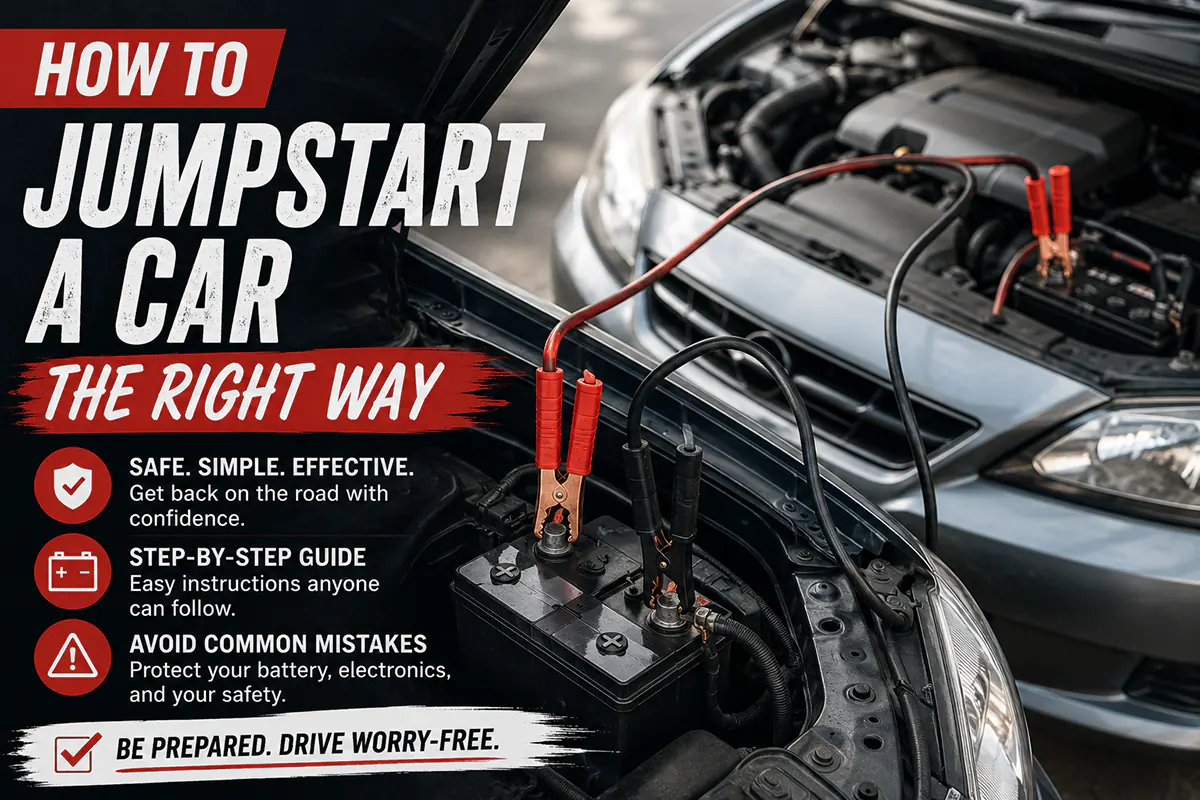
Few things are more frustrating than turning the key — or pressing the start button — only to hear clicking or complete silence from your vehicle. A dead battery is one of the most common causes of a car that won’t start, and knowing how to safely jumpstart a vehicle can save time, money, and stress.
However, jumpstarting a car incorrectly can damage sensitive electrical systems, batteries, or even cause serious injuries.
In this guide, we’ll explain how to jumpstart a car the right way, common mistakes to avoid, and when it’s time to replace the battery instead.
Why Car Batteries Die
Your battery provides the electrical power needed to start the engine and operate vehicle electronics.
Common reasons batteries die include:
- Leaving lights on
- Extreme temperatures
- Old battery age
- Corroded terminals
- Faulty alternator
- Parasitic electrical drains
- Long periods without driving
Most car batteries last:
- Approximately 3 to 5 years
Eventually, every battery loses its ability to hold a charge.
Signs of a Dead Battery
Before jumpstarting, look for common battery failure symptoms:
- Clicking sound when starting
- Slow engine cranking
- Dim headlights
- Electrical accessories not working
- Dashboard lights flickering
- Complete loss of power
If the battery is the issue, a jumpstart may temporarily get the vehicle running again.
What You Need to Jumpstart a Car
To safely jumpstart a vehicle, you’ll need:
- Jumper cables
- Another running vehicle with a good battery
OR - A portable jump starter pack
Always inspect jumper cables for damage before use.
Safety Precautions Before Jumpstarting
Safety should always come first.
Before connecting anything:
1. Park Vehicles Safely
- Place both vehicles in Park (or Neutral for manual transmissions)
- Set parking brakes
- Turn off both engines
2. Keep Metal Away from Battery Terminals
Avoid allowing tools or metal objects to touch both terminals simultaneously.
This can create dangerous sparks.
3. Inspect the Battery
Do NOT attempt to jumpstart a battery if you notice:
- Cracks
- Leaking fluid
- Swelling
- Smoke
- Strong sulfur smell
A damaged battery can explode.
How to Jumpstart a Car Correctly
Follow these steps carefully.
Step 1: Position the Vehicles
Park the working vehicle close enough for the jumper cables to reach, but do not allow the vehicles to touch.
Turn both vehicles off.
Step 2: Identify Battery Terminals
Locate:
- Positive terminal (+)
- Negative terminal (-)
Positive terminals are usually marked red.
Negative terminals are typically black.
Step 3: Connect the Red Positive Cable
Attach one red clamp to:
- The dead battery’s positive terminal (+)
Attach the other red clamp to:
- The good battery’s positive terminal (+)
Step 4: Connect the Black Negative Cable
Attach one black clamp to:
- The good battery’s negative terminal (-)
Attach the final black clamp to:
- An unpainted metal surface on the dead vehicle’s engine block or frame
Do NOT connect the final clamp directly to the dead battery’s negative terminal unless specified by the manufacturer.
This helps reduce spark risk near the battery.
Step 5: Start the Working Vehicle
Start the vehicle with the good battery and let it run for several minutes.
This allows some charge to transfer.
Step 6: Start the Dead Vehicle
Attempt to start the vehicle with the dead battery.
If it doesn’t start immediately:
- Wait a few more minutes
- Try again
Avoid excessive repeated cranking.
Step 7: Remove the Cables in Reverse Order
Once the vehicle starts, disconnect cables carefully in reverse order:
- Black clamp from grounded metal surface
- Black clamp from good battery
- Red clamp from good battery
- Red clamp from revived battery
Be careful not to let clamps touch each other.
Step 8: Let the Engine Run
Allow the jumped vehicle to run for:
- At least 15 to 30 minutes
Driving the vehicle helps recharge the battery.
However, if the battery repeatedly dies, replacement may be necessary.
Common Jumpstarting Mistakes to Avoid
Reversing Polarity
Connecting positive and negative cables incorrectly can:
- Damage electronics
- Blow fuses
- Destroy alternators
- Damage battery systems
Always double-check cable placement.
Connecting the Final Clamp to the Battery
Connecting the last negative clamp directly to the dead battery increases spark risk near battery gases.
Grounding to metal away from the battery is safer.
Using Damaged Jumper Cables
Frayed or damaged cables can overheat or fail to transfer sufficient power.
Jumpstarting a Frozen Battery
A frozen battery can explode when jumpstarted.
If temperatures are extremely cold and the battery appears frozen, do not attempt a jumpstart.
Can a Portable Jump Starter Replace Jumper Cables?
Yes. Portable jump starters have become very popular and convenient.
Advantages include:
- No second vehicle needed
- Safer operation
- Compact storage
- Easier roadside use
Many modern jump packs also include:
- USB charging ports
- Flashlights
- Air compressors
They are excellent emergency tools to keep in your vehicle.
When a Jumpstart Won’t Work
Sometimes a jumpstart won’t solve the problem.
Possible causes include:
- Completely failed battery
- Faulty starter motor
- Bad alternator
- Corroded battery terminals
- Electrical system issues
If the car still won’t start after repeated attempts, professional diagnostics may be necessary.
Signs Your Battery Needs Replacement
A battery may need replacement if:
- It’s over 3–5 years old
- The vehicle repeatedly needs jumpstarts
- Corrosion is excessive
- Cranking remains weak
- Battery warning light stays on
Testing the charging system can help determine whether the battery or alternator is failing.
How to Prevent a Dead Battery
To reduce the chances of battery failure:
- Turn off lights when exiting the vehicle
- Drive regularly
- Clean battery terminals
- Test the battery annually
- Replace aging batteries proactively
- Avoid leaving electronics plugged in
Preventative maintenance helps avoid roadside breakdowns.
Final Thoughts
Knowing how to jumpstart a car properly is an important skill every driver should have. Following the correct steps helps protect your battery, electrical system, and personal safety.
While a jumpstart can get you back on the road quickly, repeated battery problems often indicate a larger issue that should be inspected professionally.
If your vehicle struggles to start regularly, addressing the problem early can help prevent unexpected breakdowns and costly repairs later.
Need Professional Mobile Auto Repair in Central Ohio?
Whether you need battery replacement, electrical diagnostics, starter repairs, alternator testing, or emergency roadside assistance, Mid-Ohio Mobile Mechanic brings professional automotive service directly to your location.
Mid-Ohio Mobile Mechanic
☎️ (614) 414-2241
✉️ contact@midohiomobilemechanic.com
🌐 midohiomobilemechanic.com
Request a Quote
🚗 https://midohiomobilemechanic.com/request-a-quote/
Fast. Convenient. Reliable mobile mechanic services throughout Central Ohio.