Few vehicle problems are more concerning than discovering fluid leaks under your car. Oil and coolant leaks are among the most common automotive issues, and while some leaks may start small, ignoring them can quickly lead to overheating, engine damage, poor performance, and expensive repairs.
Knowing how to identify and troubleshoot oil and coolant leaks early can help you prevent major mechanical failures and keep your vehicle running safely.
In this guide, we’ll explain the common causes of oil and coolant leaks, warning signs to watch for, how to diagnose the problem, and when repairs should be handled immediately.
Why Fluid Leaks Should Never Be Ignored
Your engine depends on both oil and coolant to operate safely.
Engine Oil Helps:
- Lubricate moving parts
- Reduce friction
- Prevent overheating
- Protect engine components from wear
Coolant Helps:
- Regulate engine temperature
- Prevent overheating
- Protect against corrosion
- Maintain proper operating temperature
When either fluid leaks, serious engine damage can occur surprisingly fast.
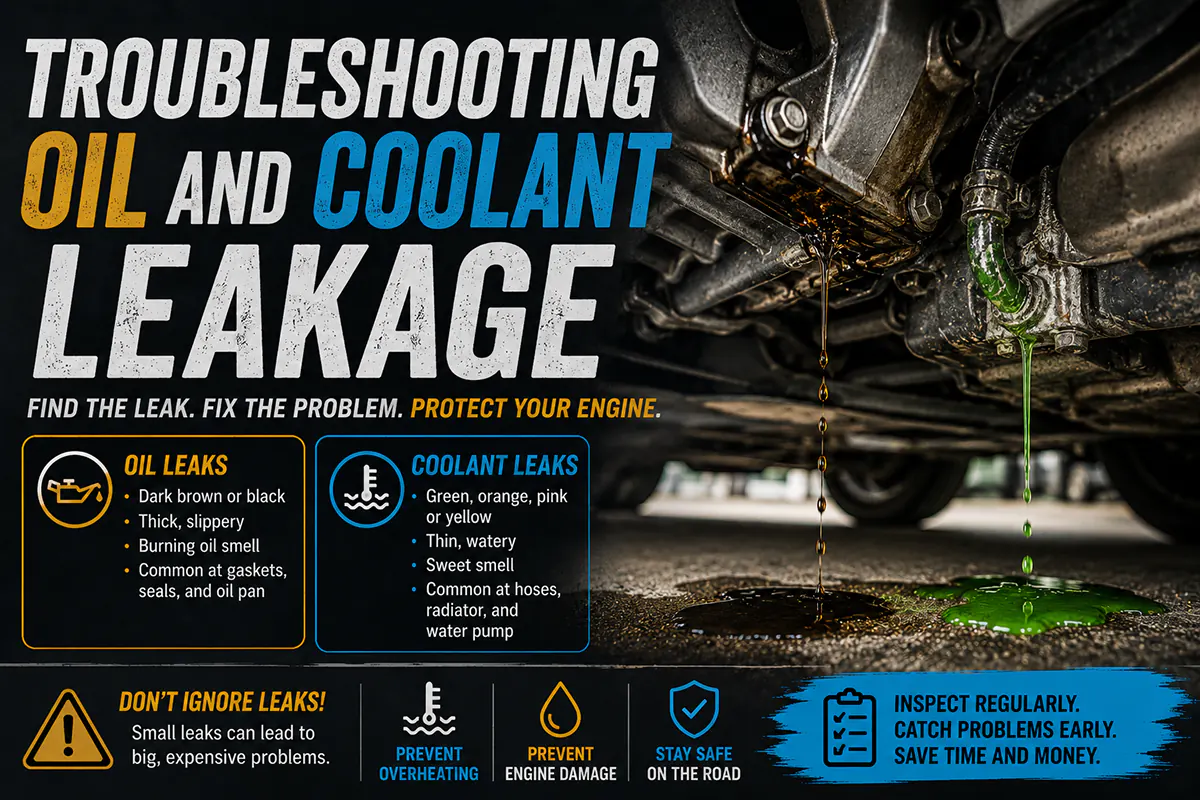
How to Identify Oil vs Coolant Leaks
One of the first steps is determining which fluid is leaking.
Oil Leak Characteristics
Engine oil is usually:
- Brown, amber, or black
- Slippery to the touch
- Thick in consistency
Oil leaks often leave:
- Dark spots under the engine
- Burning oil smells
- Smoke from the engine bay
Coolant Leak Characteristics
Coolant is commonly:
- Green
- Orange
- Yellow
- Pink
Coolant usually has:
- A sweet smell
- Thin, watery consistency
Coolant leaks may appear:
- Near the radiator
- Under the front of the vehicle
- Around hoses or the water pump
Common Causes of Oil Leaks
1. Valve Cover Gasket Leak
The valve cover gasket seals the top of the engine.
Over time, heat causes the gasket to:
- Crack
- Shrink
- Harden
Symptoms include:
- Oil on the engine
- Burning oil smell
- Oil dripping onto exhaust components
2. Oil Pan Gasket Leak
The oil pan sits underneath the engine and stores engine oil.
The gasket can fail due to:
- Age
- Road damage
- Improper installation
Oil pan leaks often leave puddles under the center of the vehicle.
3. Oil Filter Leak
A loose or damaged oil filter may leak oil after an oil change.
Causes include:
- Incorrect installation
- Double gasket issues
- Damaged filter housing
Even small leaks can lead to major oil loss over time.
4. Front or Rear Main Seal Leak
Main seals prevent oil from leaking around the crankshaft.
These leaks are more serious because replacing the seals often requires extensive labor.
Signs include:
- Heavy oil leaks
- Oil dripping between engine and transmission
- Low oil levels
5. Timing Cover Gasket Leak
The timing cover seals the front of the engine.
Leaks here may spread oil across:
- Belts
- Pulleys
- Engine components
Ignoring these leaks can damage surrounding parts.
Common Causes of Coolant Leaks
1. Radiator Leak
Radiators can crack or corrode over time.
Common radiator leak signs:
- Coolant puddles near the front bumper
- Overheating
- Visible corrosion
2. Radiator Hose Leak
Coolant hoses weaken due to:
- Heat
- Pressure
- Age
Inspect hoses for:
- Cracks
- Bulges
- Soft spots
- Leaking connections
3. Water Pump Failure
The water pump circulates coolant through the engine.
Signs of failure include:
- Coolant dripping near the pump
- Overheating
- Grinding noises
- Steam from the engine bay
A failing water pump should be replaced immediately.
4. Thermostat Housing Leak
Many thermostat housings use plastic components that crack over time.
Leaks often develop around:
- Housing seals
- Gasket surfaces
- Coolant fittings
5. Heater Core Leak
The heater core is located inside the dashboard.
Signs of heater core problems include:
- Sweet smell inside cabin
- Foggy windows
- Wet passenger-side floor
- Coolant loss
Signs You May Have Both Oil and Coolant Leaks
Some engine problems may involve both fluids.
Warning signs include:
- Overheating
- White exhaust smoke
- Milky oil
- Rapid fluid loss
- Engine performance problems
These symptoms may indicate a blown head gasket or internal engine failure.
What Is a Blown Head Gasket?
The head gasket seals the engine block and cylinder head.
When it fails, oil and coolant can mix internally.
Common symptoms include:
- White smoke from exhaust
- Coolant disappearing with no visible leak
- Milky oil on dipstick
- Overheating
- Rough engine operation
Head gasket failure requires immediate attention to avoid catastrophic engine damage.
How to Diagnose Fluid Leaks
Step 1: Check Fluid Levels
Inspect:
- Engine oil dipstick
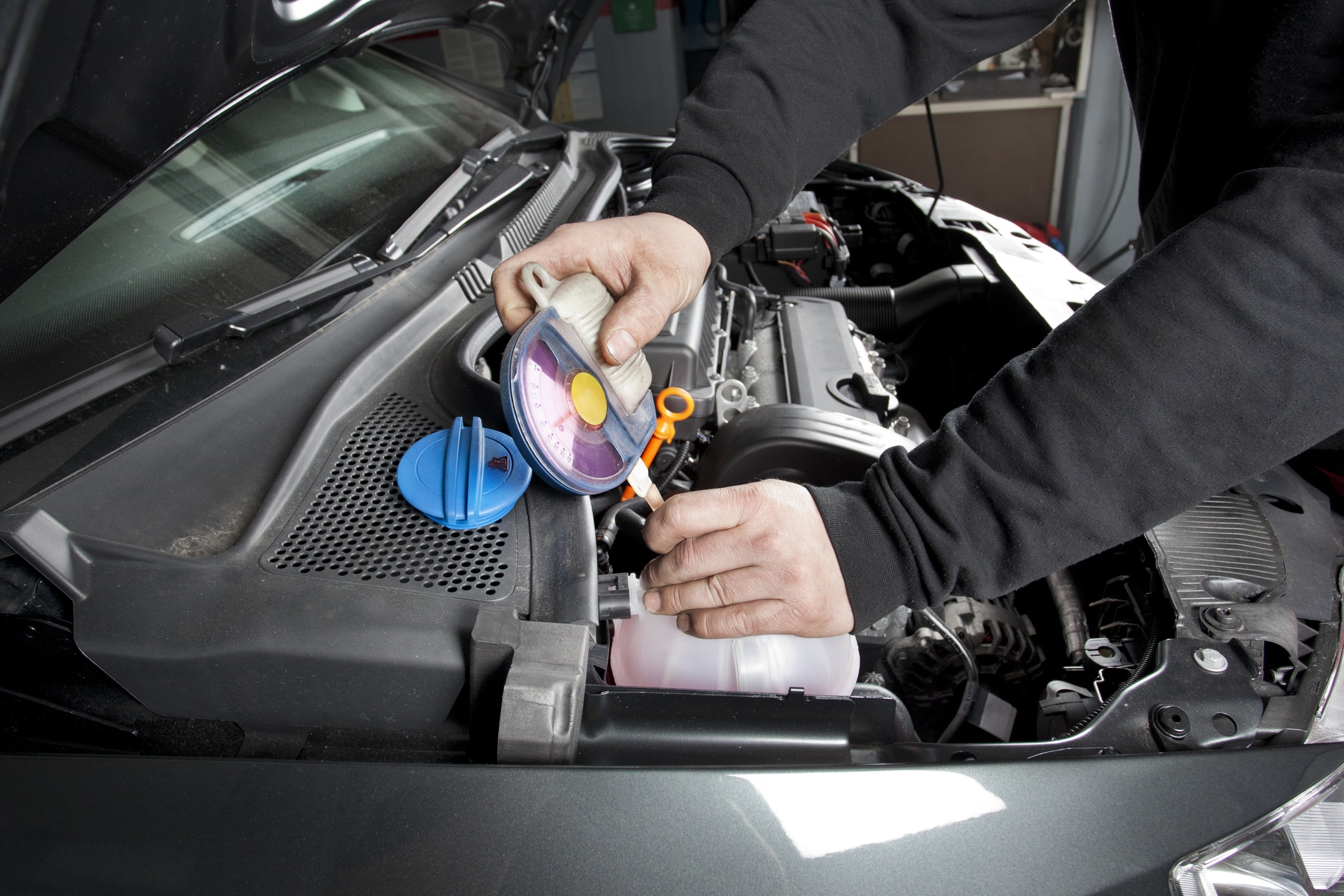
- Coolant reservoir
Low levels confirm fluid loss.
Step 2: Inspect Under the Vehicle
Look for:
- Color of fluid
- Leak location
- Size of puddles
Using cardboard under the vehicle overnight can help pinpoint leak areas.
Step 3: Inspect Engine Components
Check for:
- Wet or oily surfaces
- Cracked hoses
- Corrosion
- Coolant residue
A flashlight helps identify hidden leaks.
Step 4: Pressure Test the Cooling System
A cooling system pressure test can help locate slow coolant leaks.
This test pressurizes the system while the engine is off.
Step 5: Check for Internal Leaks
Signs of internal leaks include:
- White exhaust smoke
- Contaminated oil
- Persistent overheating
Professional diagnostic testing may be necessary.
Can You Drive With Oil or Coolant Leaks?
Minor leaks may seem harmless at first, but fluid loss can quickly worsen.
Driving with oil or coolant leaks can cause:
- Engine overheating
- Engine seizure
- Bearing damage
- Head gasket failure
- Fire hazards from leaking oil
Large or rapidly worsening leaks should never be ignored.
How to Prevent Oil and Coolant Leaks
Routine maintenance helps reduce leak risks.
Helpful Preventative Steps:
- Change oil regularly
- Inspect hoses frequently
- Replace aging gaskets
- Monitor fluid levels
- Flush coolant at recommended intervals
- Address overheating immediately
Preventative maintenance is far less expensive than major engine repairs.
When to Seek Professional Repairs
You should schedule repairs immediately if you notice:
- Large puddles under the vehicle
- Overheating
- Burning smells
- White smoke
- Rapid fluid loss
- Low oil pressure warning
- Coolant temperature warnings
Early repairs can often prevent severe engine damage.
Final Thoughts
Oil and coolant leaks are common vehicle problems, but they should never be ignored. Small leaks can quickly turn into major engine damage if fluid levels become too low or overheating occurs.
Understanding the warning signs, identifying the type of leak, and addressing problems early can help protect your engine and avoid costly repairs.
If your vehicle is leaking oil or coolant, prompt diagnosis and repair is the best way to keep your car safe, reliable, and running properly.
Need Professional Mobile Auto Repair in Central Ohio?
Whether you need leak diagnostics, cooling system repairs, gasket replacement, or engine inspections, Mid-Ohio Mobile Mechanic brings professional automotive service directly to your location.
Mid-Ohio Mobile Mechanic
☎️ (614) 414-2241
✉️ contact@midohiomobilemechanic.com
🌐 midohiomobilemechanic.com
Request a Quote
🚗 https://midohiomobilemechanic.com/request-a-quote/
Fast. Convenient. Reliable mobile mechanic services throughout Central Ohio.