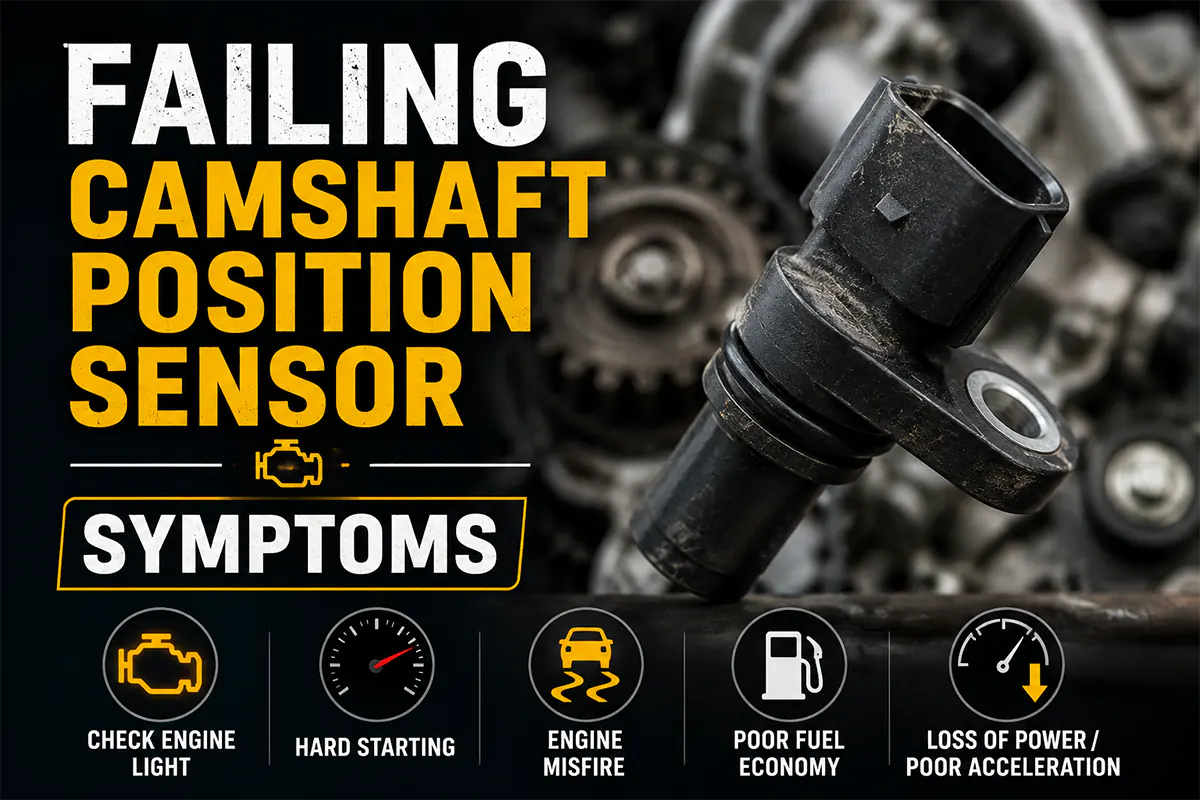
Your vehicle’s camshaft position sensor plays a major role in engine timing, fuel injection, and ignition performance. When this small electronic component starts to fail, it can trigger a wide range of drivability problems — from rough idling to a complete no-start condition.
Knowing the warning signs early can help you avoid costly repairs and unexpected breakdowns.
What Does a Camshaft Position Sensor Do?
The camshaft position sensor monitors the position and speed of the camshaft and sends that information to the engine control unit (ECU). The ECU uses this data to determine:
- fuel injector timing
- ignition timing
- valve timing adjustments
- engine synchronization
If the sensor fails or sends incorrect information, the engine computer can no longer properly coordinate these systems.
Common Symptoms of a Failing Camshaft Position Sensor
1. Check Engine Light Comes On
One of the earliest and most common symptoms is an illuminated check engine light.
A diagnostic scan may reveal codes such as:
- P0340 — Camshaft Position Sensor Circuit Malfunction
- P0341 — Camshaft Position Sensor Range/Performance
- P0342 — Camshaft Position Sensor Low Input
- P0343 — Camshaft Position Sensor High Input
These codes indicate the ECU is receiving abnormal or missing data from the sensor.
2. Hard Starting or No-Start Condition
A failing camshaft position sensor can make your engine difficult to start because the ECU struggles to determine proper ignition and fuel timing.
You may notice:
- extended cranking
- intermittent starting problems
- complete failure to start
In severe cases, the engine may crank normally but never fire up.
3. Rough Idle and Engine Vibration
When timing data becomes inconsistent, the engine may run unevenly at idle.
Common signs include:
- shaking while stopped
- fluctuating RPMs
- rough or unstable idle
These symptoms often become more noticeable as the sensor continues to deteriorate.
4. Engine Misfires
Improper timing can cause cylinders to fire at the wrong moment, leading to engine misfires.
Drivers may experience:
- jerking or sputtering
- hesitation during acceleration
- reduced engine smoothness
Ignoring persistent misfires can eventually damage the catalytic converter.
5. Loss of Power and Poor Acceleration
Another common symptom is sluggish engine performance.
You might notice:
- weak acceleration
- delayed throttle response
- reduced engine power
Some vehicles may even enter “limp mode,” limiting performance to protect the engine from further damage.
6. Engine Stalling
A bad camshaft position sensor can cause the engine to suddenly stall while idling or driving.
In many cases, the problem becomes worse as the engine heats up because internal sensor components fail under higher temperatures.
Typical symptoms include:
- random stalling at stoplights
- engine shutting off while driving
- restarting after cooling down
7. Poor Fuel Economy
Incorrect timing data can disrupt fuel delivery and combustion efficiency.
As a result, drivers may experience:
- increased fuel consumption
- reduced MPG
- inefficient engine operation
8. Transmission Shifting Problems
Modern automatic transmissions often rely on engine timing information to shift properly.
A failing sensor may cause:
- delayed shifting
- harsh gear changes
- transmission hesitation
These issues can sometimes mimic transmission failure even though the root cause is engine-related.
What Causes a Camshaft Position Sensor to Fail?
Several factors can contribute to sensor failure, including:
- heat damage
- oil contamination
- wiring issues
- corrosion
- age and wear
- internal electrical failure
Because the sensor operates in a high-temperature engine environment, gradual deterioration is common over time.
Can You Drive With a Bad Camshaft Position Sensor?
While some vehicles may continue running temporarily, driving with a failing camshaft position sensor is risky.
The vehicle may:
- stall unexpectedly
- become difficult to restart
- suffer reduced performance
- develop catalytic converter damage from misfires
If symptoms are severe, repairs should be addressed as soon as possible.
How Is a Camshaft Position Sensor Diagnosed?
Technicians typically diagnose the problem using:
- OBD-II scan tools
- live engine data
- multimeter testing
- oscilloscope waveform analysis
- wiring inspections
Because camshaft sensor symptoms overlap with other engine problems, proper testing is important before replacing parts.
Camshaft Position Sensor Replacement Cost
Replacement costs vary depending on the vehicle and sensor location.
Typical costs include:
- Sensor: $25–$200
- Labor: $50–$250
Luxury vehicles and engines with difficult access may cost more.
Final Thoughts
A failing camshaft position sensor can create a surprising number of engine performance problems, including rough idling, stalling, misfires, poor acceleration, and no-start conditions.
Recognizing these symptoms early can help prevent more serious engine damage and reduce repair costs. If your check engine light is on and your vehicle is showing timing-related symptoms, testing the camshaft position sensor should be part of the diagnostic process.
If you know your vehicle’s year, make, model, and engine size, you can also look up the exact sensor location and replacement procedure for a more accurate diagnosis.