Your vehicle’s braking system is one of the most important safety features on the road. Every time you slow down, stop at an intersection, or avoid a collision, your brakes play a critical role in keeping you and others safe.
Unfortunately, many drivers ignore early brake warning signs until the problem becomes dangerous — or expensive.
Recognizing brake issues early can help prevent accidents, reduce repair costs, and keep your vehicle performing safely.
In this guide, we’ll cover the most common brake warning signs every driver should know, what they mean, and when to seek professional repairs.
Why Brake Problems Should Never Be Ignored
Your braking system works under extreme pressure and heat. Over time, components wear down naturally and require maintenance.
Ignoring brake problems can lead to:
- Longer stopping distances
- Reduced vehicle control
- Brake failure
- Damaged rotors and calipers
- Higher repair costs
- Increased accident risk
Early diagnosis is the key to safe and affordable brake repairs.
How Your Brake System Works
Modern brake systems rely on several components working together, including:
- Brake pads
- Brake rotors
- Brake calipers
- Brake fluid
- Brake lines
- Master cylinder
- ABS system
When you press the brake pedal, hydraulic pressure forces the brake pads against the rotors to slow the vehicle.
If any part of the system begins failing, braking performance can suffer quickly.
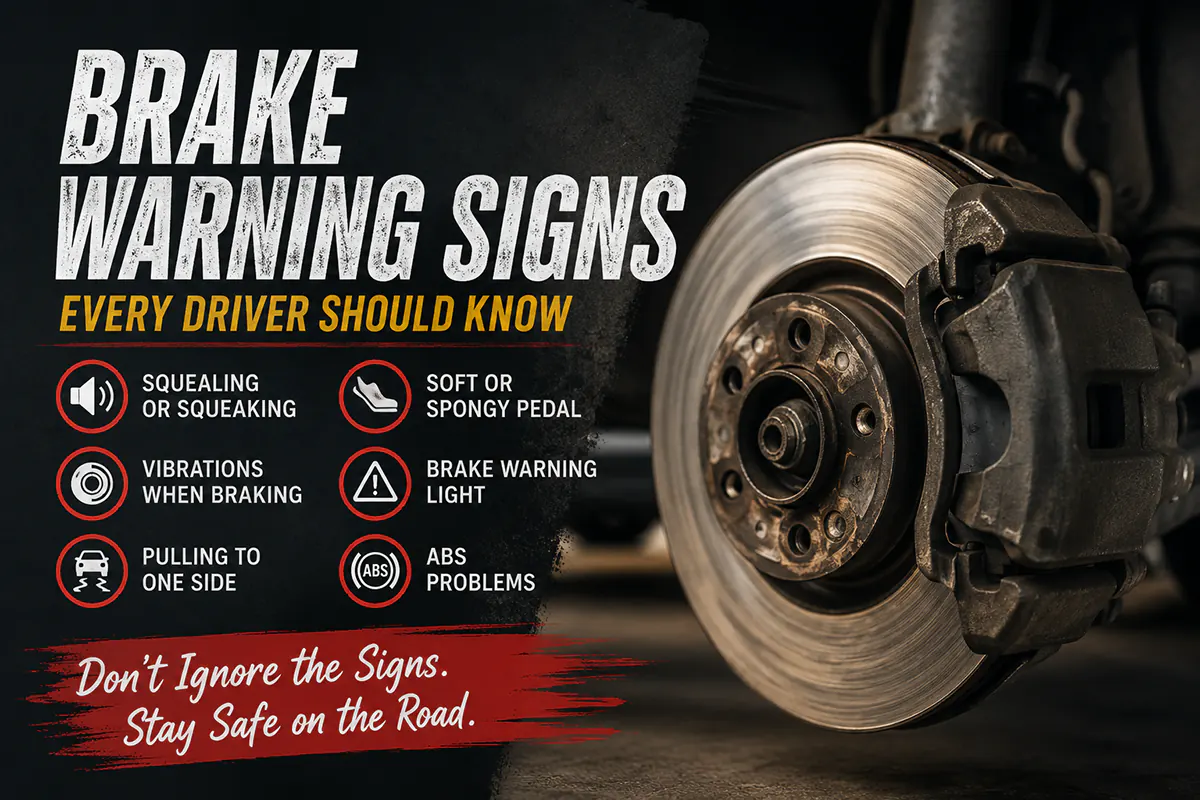
1. Squeaking or Squealing Brakes
One of the most common warning signs is high-pitched squealing or squeaking when braking.
Common Causes:
- Worn brake pads
- Moisture on rotors
- Low-quality brake pads
- Glazed brake surfaces
Most brake pads include wear indicators designed to squeal when replacement is needed.
Don’t Ignore:
Persistent squealing often means the brake pads are becoming too thin.
2. Grinding Noise While Braking
Grinding noises are far more serious than squealing.
Possible Causes:
- Completely worn brake pads
- Metal-on-metal contact
- Damaged rotors
- Caliper problems
When brake pads wear out fully, the metal backing plate grinds against the rotor.
Why It’s Dangerous:
Grinding can quickly destroy rotors and significantly reduce stopping ability.
Immediate repairs are strongly recommended.
3. Vibrations or Pulsing Brake Pedal
If the brake pedal vibrates or pulses during braking, the rotors may be warped or uneven.
Common Causes:
- Warped brake rotors
- Uneven rotor wear
- Excessive heat buildup
You may feel shaking in:
- The brake pedal
- Steering wheel
- Entire vehicle
Why It Matters:
Warped rotors reduce braking efficiency and can affect vehicle control.
4. Soft or Spongy Brake Pedal
A brake pedal that feels soft, spongy, or sinks toward the floor is a serious warning sign.
Possible Causes:
- Air in brake lines
- Brake fluid leaks
- Failing master cylinder
- Moisture contamination in brake fluid
Why It’s Dangerous:
Reduced hydraulic pressure can lead to major braking failure.
This issue should be inspected immediately.
5. Vehicle Pulling While Braking
If your vehicle pulls to one side while braking, uneven braking force may be occurring.
Common Causes:
- Sticking brake caliper
- Uneven brake pad wear
- Brake fluid issues
- Suspension problems
Why It’s Unsafe:
Pulling affects steering control and may increase stopping distance.
6. Brake Warning Light on Dashboard
Modern vehicles monitor braking system performance electronically.
A brake warning light may indicate:
- Low brake fluid
- ABS problems
- Hydraulic issues
- Parking brake problems
Important:
Never ignore dashboard brake warnings.
Even if braking feels normal, hidden issues may be developing.
7. Burning Smell After Braking
A strong burning odor after braking can indicate overheating brakes.
Possible Causes:
- Stuck calipers
- Riding the brakes
- Overheated brake pads
- Heavy braking
Warning:
Overheated brakes lose effectiveness and may fail under extreme conditions.
Pull over safely and allow the brakes to cool if overheating occurs.
8. Longer Stopping Distances
If your vehicle takes longer to stop than usual, brake performance may be declining.
Common Causes:
- Worn brake pads
- Low brake fluid
- Rotor wear
- Hydraulic problems
Why It Matters:
Even slightly increased stopping distance can become dangerous during emergencies.
9. Brake Fluid Leaks
Brake fluid is essential for hydraulic pressure.
Leaks may appear:
- Near wheels
- Under the master cylinder
- Along brake lines
Signs of a Leak:
- Soft brake pedal
- Low fluid reservoir
- Warning lights
- Reduced braking power
Brake fluid leaks are serious safety hazards.
10. ABS System Problems
The Anti-lock Braking System (ABS) helps prevent wheel lockup during emergency braking.
ABS warning signs include:
- ABS warning light
- Reduced traction control
- Pulsing issues
- Unusual braking behavior
ABS problems should be diagnosed professionally.
How Often Should Brakes Be Inspected?
Most mechanics recommend brake inspections:
- Every 10,000 to 15,000 miles
- During tire rotations
- At every oil change for high-mileage vehicles
Brake pad lifespan varies based on:
- Driving habits
- Traffic conditions
- Vehicle weight
- Brake material quality
Signs You Need Brake Pads Replaced Immediately
You likely need immediate brake service if you notice:
- Grinding noises
- Thin brake pads
- Metal scraping sounds
- Brake warning lights
- Poor stopping performance
Waiting too long can damage rotors and increase repair costs significantly.
Tips to Extend Brake Life
You can help your brakes last longer by:
- Avoiding aggressive braking
- Leaving extra stopping distance
- Reducing heavy loads when possible
- Flushing brake fluid periodically
- Addressing brake noises early
- Avoiding riding the brakes downhill
Smooth driving habits reduce brake wear dramatically.
Why Professional Brake Inspections Matter
Brake systems involve critical safety components that require proper diagnosis and repair.
Professional inspections can identify:
- Uneven wear
- Fluid contamination
- Rotor damage
- Hydraulic leaks
- Caliper problems
- ABS issues
Catching problems early helps prevent costly repairs and dangerous failures.
Final Thoughts
Your brakes are your vehicle’s most important safety system, and early warning signs should never be ignored. Squealing, grinding, vibrations, soft pedals, warning lights, and longer stopping distances all indicate potential problems that require attention.
Routine brake inspections and timely repairs can help keep you safe, improve vehicle performance, and prevent expensive damage later.
If you notice any unusual brake symptoms, having your braking system inspected as soon as possible is one of the smartest things you can do for your safety and your vehicle.
Need Professional Mobile Brake Repair in Central Ohio?
Whether you need brake pad replacement, brake diagnostics, rotor service, or general vehicle maintenance, Mid-Ohio Mobile Mechanic brings professional automotive repair directly to your location.
Mid-Ohio Mobile Mechanic
☎️ (614) 414-2241
✉️ contact@midohiomobilemechanic.com
🌐 midohiomobilemechanic.com
Request a Quote
🚗 https://midohiomobilemechanic.com/request-a-quote/
Fast. Convenient. Reliable mobile mechanic services throughout Central Ohio.