Vehicle paint does not remain static over the life of a car. Exposure to sunlight, weather conditions, and environmental contaminants causes gradual but measurable changes in color, gloss, and surface texture. These changes create real challenges during auto body repair, where newly applied paint must visually integrate with surrounding panels that may be years old. Understanding how paint ages helps explain why even factory paint codes are often only a starting point rather than a final answer when repairing collision damage.
As vehicles age, factors such as ultraviolet radiation, oxidation, and maintenance habits all influence how paint appears to the eye. Auto body professionals must evaluate these changes before repair work begins, particularly when precise color matching is required to restore a uniform finish. Minnetonka Collision regularly encounters these challenges across a wide range of vehicle makes, model years, and exposure histories, making paint aging a central consideration in modern repair practices.
This article examines how ultraviolet exposure alters paint over time, why older finishes demand different matching techniques, and how oxidation affects color accuracy. It also explores whether faded paint can still be matched after a collision and how storage conditions, such as garage parking versus outdoor exposure, influence paint aging. Each section provides technical insight into the factors that shape paint appearance long after a vehicle leaves the factory.
How UV Exposure Gradually Changes Car Paint Color Over Time
Ultraviolet radiation is one of the most significant contributors to long-term paint color change. Modern automotive paints rely on pigments suspended in a resin system protected by a clear coat. Prolonged UV exposure breaks down the chemical bonds in both the pigments and the clear coat, leading to visible fading, dullness, and subtle color shifts. Dark colors often show lightening and loss of depth, while lighter colors may yellow or lose clarity.
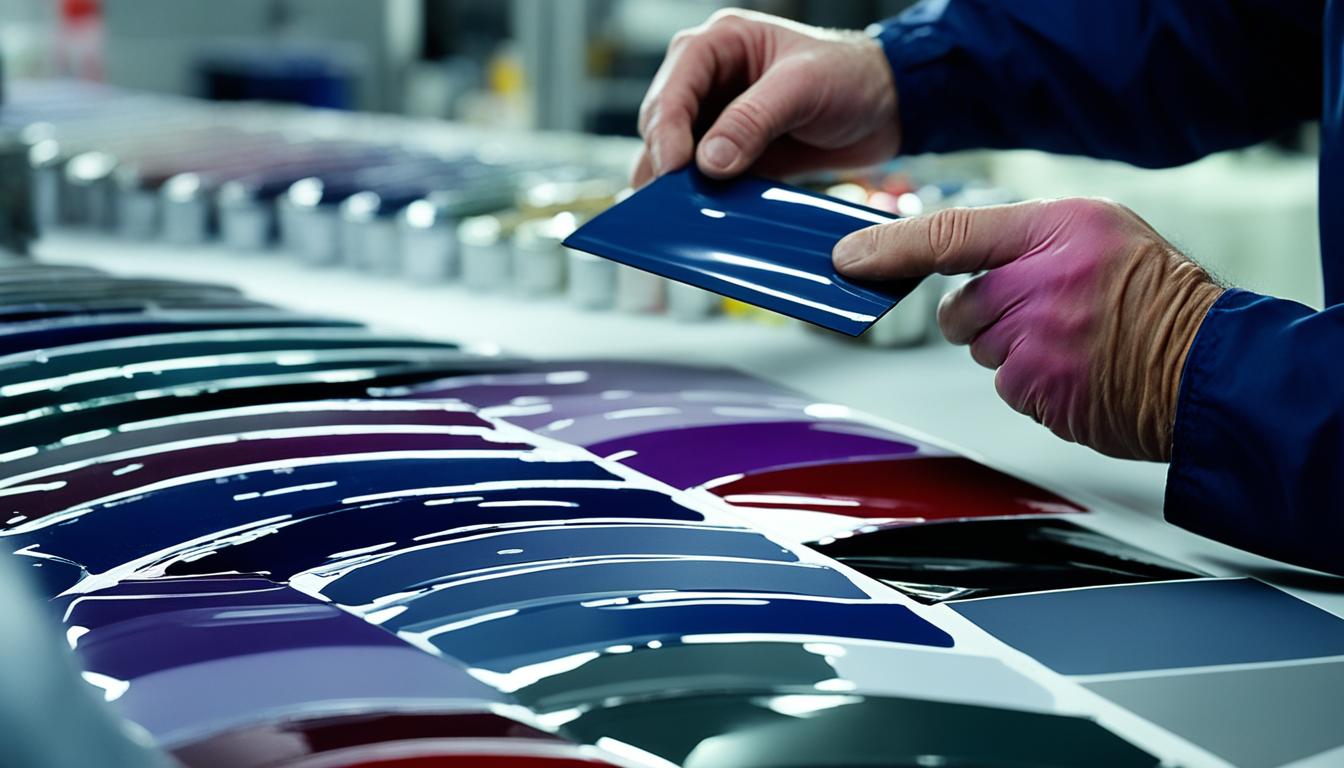
The degradation process is uneven across a vehicle. Horizontal surfaces such as the hood, roof, and trunk receive more direct sunlight than vertical panels, causing color variation between adjacent areas. This uneven exposure explains why factory paint codes alone cannot account for real-world aging effects. Spectrophotometers and visual assessments are used to identify these differences during color matching, allowing technicians to adjust formulas to reflect the paint’s current condition rather than its original state.
Clear coat erosion also contributes to apparent color change. As the clear coat thins and oxidizes under UV exposure, light scatters differently across the surface. This alters gloss levels and perceived hue, even if the base color pigments remain largely intact. Accurate color evaluation requires assessing both pigment fade and surface condition to avoid mismatched repairs.
Why Older Automotive Paint Requires Different Color Matching Techniques
Older paint presents challenges because its appearance no longer matches factory specifications. Over time, exposure to UV radiation, moisture, airborne pollutants, and temperature cycles alters the reflectivity and saturation of the finish. These changes mean that mixing paint strictly by manufacturer code often produces a result that appears too vibrant or too dark when applied next to aged panels.
Auto body professionals compensate by blending color formulas and adjusting tint ratios based on measured deviations. Advanced matching systems compare multiple points on the vehicle to identify color drift across panels. This process accounts for years of wear that affect how light interacts with the paint surface, which is essential during precision auto body repair where visual consistency is critical.
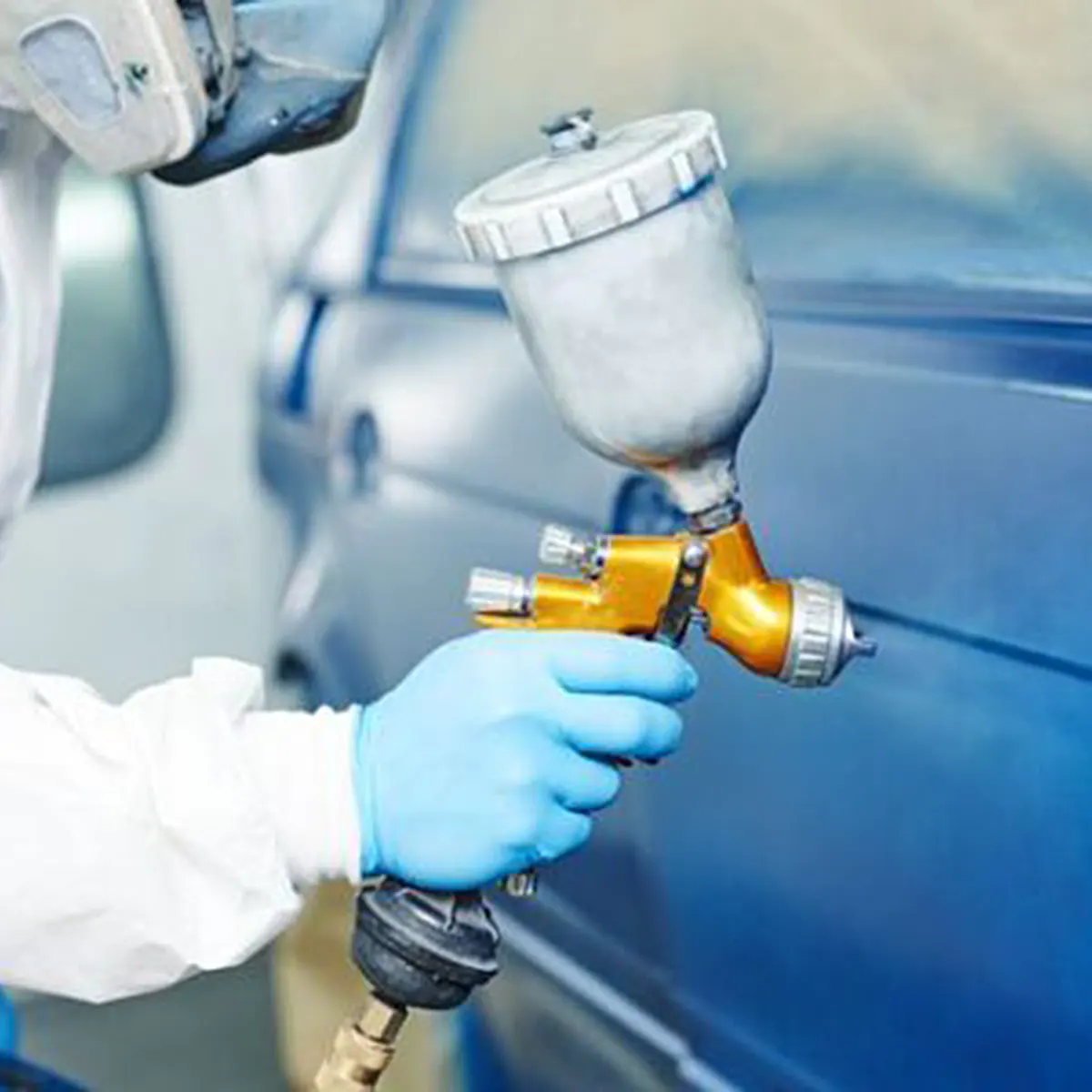
Application techniques also differ for older paint. Blending into adjacent panels rather than repainting a single area helps create a gradual visual transition. This approach reduces the perception of mismatch by distributing color differences across a wider area, aligning repaired sections with the vehicle’s aged finish.
How Auto Body Shops Account for Oxidation During Color Matching
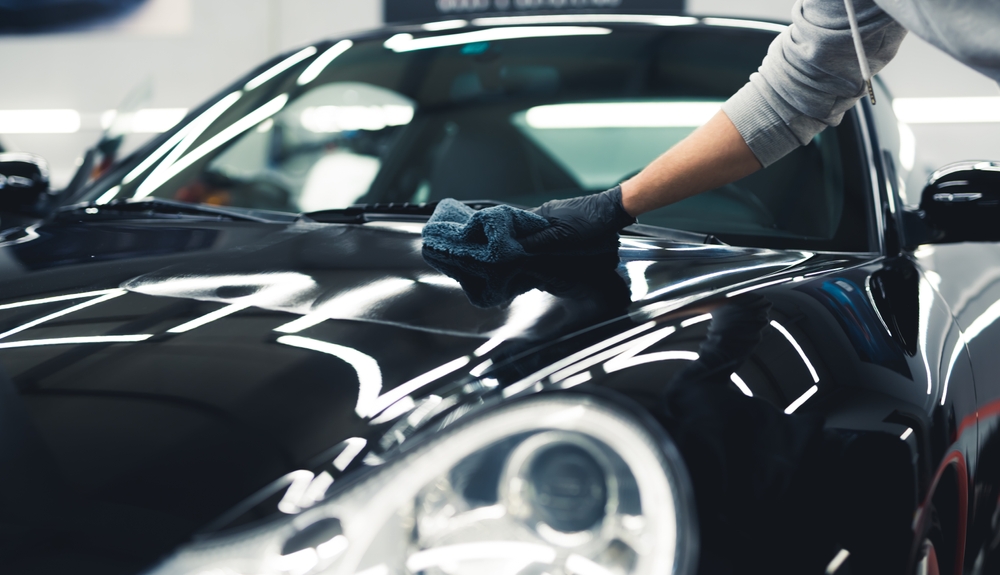
Oxidation occurs when oxygen interacts with paint resins, leading to chalking, loss of gloss, and surface roughness. This process is common on vehicles exposed to sunlight and environmental contaminants without regular polishing or protective coatings. Oxidized paint reflects light diffusely, which makes colors appear flatter and lighter than their original formulation.
Before matching color, technicians evaluate oxidation levels by cleaning, polishing test areas, or lightly compounding sections of the paint. This reveals the true underlying color beneath the oxidized layer. Without this step, matching efforts may target a distorted surface appearance rather than the actual pigment color, resulting in inconsistent repairs.
Paint matching systems incorporate these findings by adjusting brightness, metallic flake orientation, and toner balance. Accounting for oxidation ensures that newly applied paint aligns with the vehicle’s real-world condition, not just its faded surface characteristics.
Accuracy of Matching Faded Paint After a Collision
Faded paint can still be matched accurately when proper evaluation methods are used. Advances in digital color analysis allow technicians to capture precise color data from multiple vehicle locations, compensating for uneven fade patterns. These readings inform customized paint formulas that reflect the vehicle’s current appearance rather than its original factory color.
Blending techniques play a central role in achieving accuracy. By gradually transitioning new paint into existing panels, visual discrepancies are minimized. This approach leverages human visual perception, which is more forgiving of gradual changes than abrupt color boundaries.
Surface preparation also affects results. Proper sanding, sealing, and clear coat application ensure that the new paint reflects light similarly to the surrounding areas. When these variables are controlled, faded paint can be matched to a level that maintains visual continuity across the repaired vehicle.
Differences in Paint Aging Between Garaged and Outdoor Vehicles
Vehicles stored in garages experience significantly slower paint aging than those parked outdoors. Reduced UV exposure limits pigment breakdown and clear coat degradation. Garaged vehicles also avoid prolonged exposure to moisture, temperature extremes, and airborne pollutants, which accelerate chemical wear on paint surfaces.
Outdoor vehicles typically show more pronounced fading, oxidation, and clear coat erosion. These effects accumulate unevenly based on sun angle, climate, and parking orientation. As a result, color variation across panels is more common, complicating matching efforts during repair.
Understanding storage history helps refine color matching strategies. Shops evaluate exposure patterns to determine whether localized blending or broader panel refinishing is required. For vehicles with extensive outdoor exposure, customized adjustments based on real-time surface analysis are essential for achieving consistent results. Readers seeking more technical insight into this process can reference Minnetonka Collision resources at Minnetonka Collision.
Professional Color Matching Solutions Backed by Experience
Accurately restoring a vehicle’s appearance after paint aging requires technical precision, proven processes, and experience with real-world exposure conditions. Minnetonka Collision applies advanced color analysis, blending techniques, and surface evaluation methods to address the effects of UV exposure, oxidation, fading, and long-term environmental wear. By assessing how paint has changed over time, repairs are performed with attention to panel variation, gloss consistency, and light reflection, producing finishes that integrate naturally with the existing vehicle surface.
Each of the challenges discussed—UV-driven color shift, aging-related formula changes, oxidation distortion, faded paint recovery, and storage-related differences—requires a tailored approach. Minnetonka Collision evaluates these variables during the repair planning process, ensuring that paint application aligns with the vehicle’s current condition rather than relying on factory data alone. This level of assessment supports accurate results across a wide range of vehicle ages and exposure histories.
For drivers seeking expert evaluation or repair services, Minnetonka Collision is located at 11040 Highway 55, Plymouth, MN 5544,1 and can be reached at 763-230-7805. To discuss repair options, color matching concerns, or schedule an assessment, visit their contact us page to connect with their team directly.