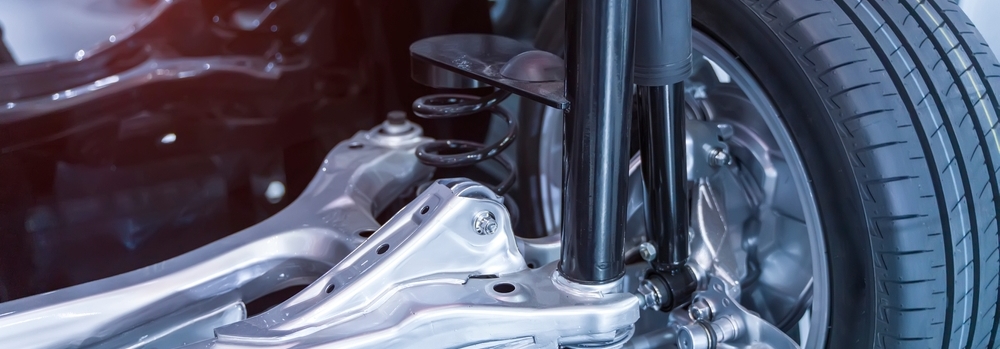
 Modern vehicles really have us spoiled. Back in the day, road trips required a certain amount of grit and endurance. Now, we have climate control, GPS, and driver-assistance systems galore. But even with all the advancements in automotive design, motorists must still stay aware of mechanical wear and tear. It’s a fact that climate, driving habits, and vehicle type affect component longevity. If we want to keep our creature comforts, we need to put in the effort. It’s our responsibility to perform routine maintenance to prevent worn bushings in the auto suspension, resulting in a rough ride.
Understanding Your Auto Suspension
Your auto suspension system is a critical safety feature that directly impacts handling, ride comfort, and overall roadworthiness. It’s responsible for absorbing shocks, but it also helps maintain tire contact with the road. This blog highlights the significance of bushings and their role in cushioning the other components of the suspension system.
What Are Bushings?
Bushings are small cushions made of springy materials, like reinforced rubber or polyurethane. They mount to steering and suspension parts to help absorb excess movements and reduce road noise. They help with how your car handles bumps, wheel alignment, and the way your steering connects to the suspension. Bushings wear out from age, heat, friction, and exposure to chemical compounds (like engine oil, road salts, and other automotive fluids). Performing routine maintenance will help prolong the lifespan of suspension bushings and prevent a rough ride. Most vehicles have bushings on the following auto suspension parts.
Ball Joints
Ball joints are a component of a car’s front suspension. They consist of a ball and socket (like a human’s hip joint), which provides a pivot between the steering knuckles and control arms. The ball joint’s links, bushings, and bearings allow your vehicle’s front wheels to move up & down and turn left & right independently.
Control Arms
Control arms help your vehicle’s wheels move up and down over uneven road surfaces. They connect the ball joints and steering knuckles to the frame. They are stamped or forged metal parts, shaped like a wishbone or a letter ‘A’. The rubber (or polyurethane) bushings in control arms provide cushioning between other components and help absorb vibrations. Over time, control arm bushings can crack, harden, or tear, requiring replacement.
Shock Absorbers & Struts
Shock absorbers work with springs to control vehicle movement. Shocks use hydraulic fluid to reduce bouncing from bumpy roads as the springs compress and release. This action keeps your tires in contact with the road.
Struts dampen movement while being a load-bearing component of your auto suspension. They attach directly to the chassis and steering knuckles, providing a mounting point for the coil spring.
Bushings support both these components with a cushion, preventing vibrations from traveling through the chassis into the cabin area.
Sway Bars
Some vehicles use sway bars to limit side-to-side lean, especially during turning or quick steering maneuvers. They are metal bars attached to opposite wheels (both front wheels or both rear wheels) and resist twisting, which keeps the wheels level with one another. Sway bar bushings provide cushioning and just the right amount of movement at the attachment points. The bushings eventually wear out. When they do, there are often obvious signs like banging, side-to-side rocking, and shaky steering.
Tie Rods
Tie rods connect the steering rack to the steering knuckles, transmitting your turning motions from the steering wheel to the wheels. Each tie rod consists of an inner and an outer end. The inner end connects to the rack, while the outer end connects to the steering knuckle. Between these connections, bushings provide protection from metal-on-metal contact.
Symptoms Of Bad Bushings
Bad bushings present differently depending on which component they mount to. Signs may include more vehicle movement, noises, or sluggish response times when steering or braking. Since bushings impact handling, steering, ride comfort, and vehicle safety, it’s important to note when and where the following symptoms occur.
Braking
Bushings are responsible for reducing the transfer of energy from one moving component to another. When you press the brake pedal, your forward momentum halts, resulting in a ton of energy with nowhere to go. If you have bad bushings, hard braking will result in more vibrations felt throughout the vehicle.
Excessive Chassis Movements
If your vehicle bounces or sways more than usual when driving over road imperfections, you should schedule a diagnostic inspection to determine the cause. Your car may also lean more when going over bumps, affecting just one side of the suspension. Excessive chassis movements affect vehicle stability and can contribute to a higher risk of accidents and collisions.
Noises: Clicks, Clunks, And Creaks
Noises to watch for are clicks or clunks when making hard turns or driving over potholes. Creaks from the front end, particularly while accelerating or changing direction, are also worth noting. Unusual noises in your vehicle’s suspension are signs of wear or malfunctions, so make a service appointment with your auto technician right away.
Rough Ride
A rough ride is often an indication that something is wrong with your auto suspension. Symptoms may start small and get worse over time. As a driver, it’s our job to notice changes in vehicle performance and schedule routine maintenance to help avoid expensive repairs. A rough ride may feel like:
- Bouncing up and down
- Rocking back and forth
- Shaking side to side
- Shimmying on smooth roads
- Swaying around corners
- Vibrations all over
Unstable Steering
Unstable steering is when your vehicle pulls to the side, or the steering wheel feels loose or unresponsive when you turn it. Worn bushings connecting the tie rods, sway bars, or steering knuckles to other steering and suspension systems will impact handling and vehicle safety.
Routine Maintenance in Ann Arbor, MI
At Ron’s Garage, our technicians will help you keep to your factory-recommended service intervals. Performing routine maintenance can significantly reduce repair and part replacement costs over the lifetime of your vehicle.
Auto Suspension Repair Appointment
Bushings deteriorate due to wear, age, heat, and exposure to chemical compounds, typically requiring replacement around 80,000 to 100,000 miles. Your mileage may vary. Call us at (734) 961-4701 or visit our website to make your appointment today.
The post Do Bad Suspension Bushings Result In A Rough Ride? first appeared on Ron’s Garage | Auto Repair Ann Arbor MI | Brake Repair.